How long before a fresh stain sets and becomes permanent
Every minute counts: dye stains are hours away, greasy stains are days away, but quick action changes everything.

Something just spilled on your shirt and now you're staring at the stain with one question in your head: how much time do I have before it's too late?
There's no single answer, because different stains set by different mechanisms: blood and sweat through protein denaturation, wine and coffee through oxidation, grease through fibre penetration, and ink through nearly instant chemical bonding.
Dye stains count in minutes, grease in hours. Below you'll find specific time windows for each type so you know exactly how hard you need to chase the clock.
How much time you have, by stain type
Protein stain (blood, egg, milk, sweat)
Cold water immediately, gentle tamping, rinse from underside of fabric
The sooner you act, the better: noticeable loss of solubility shows within a few hours.
Tannic stain (wine, coffee, tea, juice)
Cold water, immediate rinsing, no drying before removal
Act best within the first hour, before oxidation turns the pigment into a permanent brownish stain.
Fatty stain (grease, sauce, cosmetics, oil)
Sprinkle with starch or talc, wait, brush off excess before washing
You have hours, not minutes, but removal quality drops gradually, especially in polyester.
Dye stain (ink, marker, paint, henna)
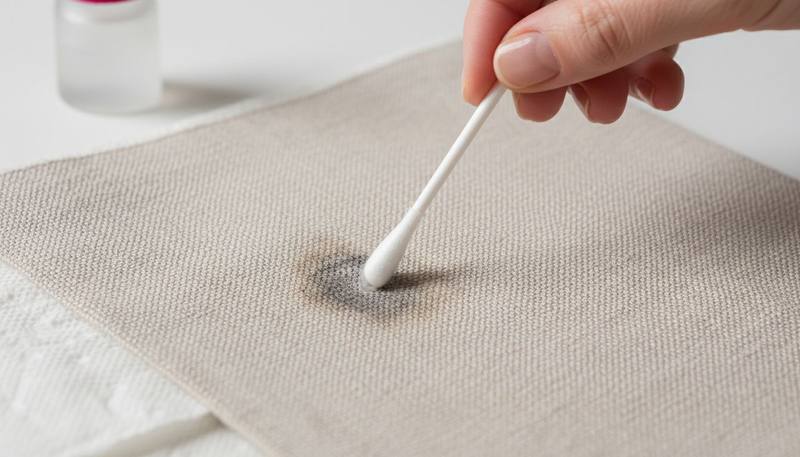
Immediate tamping from edges to centre, no rubbing
This is the only category that counts in minutes, not hours.
Grass stain (chlorophyll)
Cold water, ideally wash with enzyme-based detergent
You have hours to respond, but washing at low temperature without enzymes won't remove chlorophyll.
Why old stains become permanent in fabric
fibre penetration and chemistry, not just time
A stain doesn't "set" because it decided to. Behind each type is a different chemical process, at a different speed.
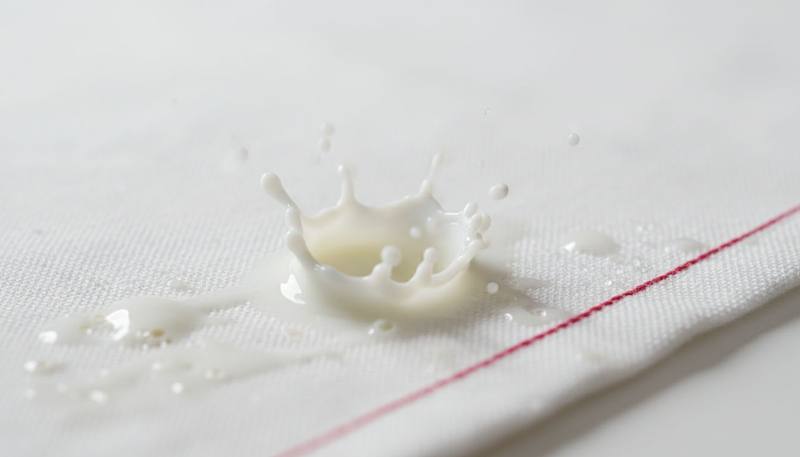
Blood, egg, milk, sweat. These are proteins, and denaturation irreversibly curls their structure: they lose solubility, and washing enzymes have nothing left to grab. Degradation shows from around 40-45°C, and in water above 60°C or under an iron the stain cooks like egg white on a pan. Cold water isn't fussy, it's your only option.
Wine, coffee, tea, juice. Polyphenols and tannins oxidize in contact with air, so the colour shifts from bright to permanent brown. You have about an hour before light and heat finish the job.
Grease, sauce, cosmetics, and oil work differently: fat doesn't react chemically, it just physically penetrates the fibre core, deeper in polyester than in cotton. It's a gradual process, which is why you get the most time here.
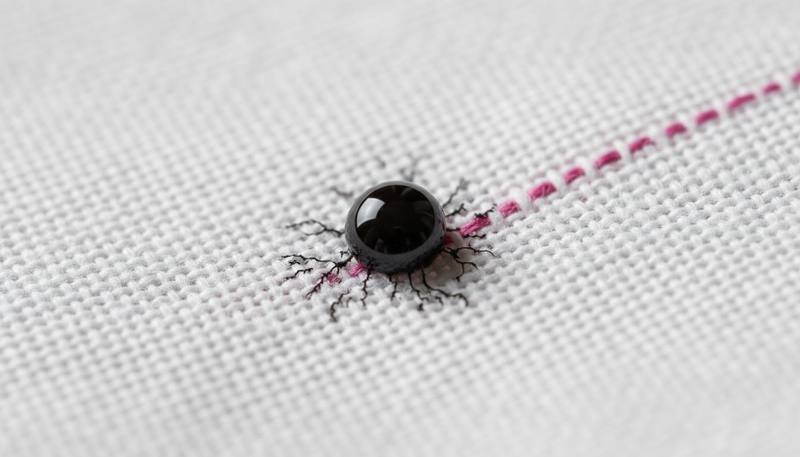
With ink, marker, paint, or henna there's no mercy: the dye binds to the fibre almost instantly, just like industrial fabric dyeing. This is the only category where you count in minutes, not hours.
Where do these numbers come from?
There is no ISO or PN standard that directly specifies the number of minutes or hours before a stain sets. Textile standards like ISO 6330 or ISO 3758 describe testing methodology, not stain kinetics. The time windows above come from industry practice and detergent manufacturer guidelines, are advisory in nature, not laboratory measurements.
Now that you know why stains get harder, let's get practical. The steps below work best on fresh stains on hardy fabrics: cotton, linen, polyester. You don't need specialist chemicals, just what you have in your kitchen and bathroom.
First aid for a fresh stain
Five steps that stop the clock and give you a real shot at complete stain removal.
- 1
Don't rub, tamp
Gently press a clean, absorbent cloth from the stain's edges towards the centre. Rubbing drives dirt deeper and can damage the fabric.
- 2
Cold water only
Never warm or hot, only cold.
- 3
Rinse from the underside of the fabric
Direct water stream from the opposite side of the stain. This pushes debris outward instead of driving it deeper.
- 4
Grease? Reach for starch
Sprinkle the stain with potato starch or talc, wait about fifteen minutes, brush off the excess before washing.
- 5
No dryer, no iron
Don't dry or press anything with a stain before it's removed. Heat sets a stain just like hot water does.
Never mix these chemicals
Bleach and ammonia (or any cleaner containing ammonia) together create toxic chloramine gas, dangerous in an enclosed space. Keep them separate, even if you have both on hand. And before using any new product on a stain, test it first on an unseen part of the fabric, like an inside seam.
What professional chemistry can do
what home methods cannot achieve
How do you know you missed the window and the stain has set? Four signals speak for themselves:
Colour has turned permanent: wine has shifted from red to brownish-grey, or where a protein stain was there's now yellowing.
The fabric feels stiffened in that spot, noticeable under your fingers.
The stain doesn't fade despite multiple cold water rinses.
There's a clear ring around the dirt, the effect of stain spread as water dried.
If you recognise any of these signs, home methods have limited impact left. On silk, wool, or fabrics marked "dry clean only" the risk of making things worse grows with each attempt.
The line between home rescue and the laundry
Do
- Tamp with cold water right away, don't wait
- Test any new product on an unseen part of the fabric
- Rinse from the underside of the material, not from the stain side
- For wine or coffee act within the first hour
- If you don't have time, secure the stain and get the item to the laundry as soon as possible
Don't
- Don't wash in hot water to "let the machine handle it"
- Don't tumble-dry or iron anything with a stain before it's gone
- Don't rub the stain instead of tamping
- Don't try home methods on silk, wool, or "dry clean only" fabrics
When you don't have time now
It's not always possible to remove a stain on the spot. If you're leaving home or don't have conditions available, rinse the stained spot with cold water, gently tamp, and set the item aside without drying or ironing. That stops the clock: a stain secured this way will wait for your laundry visit.

Now you know the theory. Practice can be less forgiving.
If you would rather not risk your favourite piece, leave it to the specialists at Gorące Żelazko laundry in Lublin.


Frequently asked questions
It depends on the stain type. Dye stains (ink, paint) count in minutes. Tannic stains (wine, coffee) give you about an hour. Protein stains (blood, milk) and grease stains give you hours, though removal quality drops over time. There's no universal window because each type sets by a different chemical mechanism.
Always cold. Hot and warm water set protein and tannic stains the same way a dryer or iron does. It's the only safe choice at the start, regardless of stain type.
The sooner, the better. Blood is a protein stain that sets through denaturation under heat, and noticeable loss of solubility shows within a few hours. Tamp with cold water right away and rinse from the underside of the fabric, never reach for hot water.
Sometimes, but home methods won't be enough. If the stain has shifted to a permanent colour, the fabric feels stiffened, or it doesn't respond to cold water rinsing, home tinkering risks making it worse. That's the signal to take it to professional cleaning instead of experimenting further.
When the stain is already set, the fabric is delicate (silk, wool), or it has a "dry clean only" tag, and always for anything valuable like a wedding dress or suit. Professional chemistry and steam method deliver much higher success without the fibre damage risk that comes from attempting it at home on a tough case.
About the author
Małgorzata Małecka
Owner of the Gorące Żelazko laundry
Małgorzata Małecka runs the Gorące Żelazko laundry in Lublin. Together with her team, she makes sure customers' clothes, shoes and fabrics come back clean and in the best possible condition.