How to Dry and Iron Nylon Without Melting It
Temperature thresholds for iron and dryer with thermoplastic fiber

Here lies a key difference between nylon and natural fibers. Remember it once and for all: polyamide is thermoplastic. Under heat it doesn't scorch like cotton or linen, it softens and melts.
That's a completely different kind of damage. Melted nylon sticks to the iron sole as a sticky, shiny layer, destroying both the garment and the pressing equipment. That's why with polyamide it's not just "is it too hot," but a specific, hard temperature limit you must never exceed.
This guide walks you through concrete temperature thresholds for the iron and the dryer, a step by step ironing procedure, common care mistakes, and the signs that mean you should hand the item to a professional laundry instead of risking another attempt at home.
Why Polyamide Melts Instead of Scorching
the structure of a thermoplastic fiber and the softening threshold worth knowing
Polyamide is a plastic formed into long, thin fibers. Under heat its polymer chains don't oxidize and char the way cellulose in cotton or linen does, they lose rigidity and start to flow. That's why nylon doesn't “scorch” in the sense of a dark, brittle mark, it changes state: first it softens, then it turns sticky, and finally it melts into a hard, glossy crust.
The same mechanism explains why melted nylon sticks to hot surfaces: an iron sole, mangle rollers, or a dryer drum. The molten layer fuses with the metal or with other fabric in the load, and once it cools it hardens and can't be separated without damaging both surfaces. That's why with polyamide, temperature isn't a matter of ironing comfort, it's a hard physical limit.
Temperature Thresholds for Polyamide
Maximum 110°C, marked with one dot on the tag
Lower, about 90-100°C, always through a damp cloth
Maximum 60-70°C, ideally a low-heat program
About 215-220°C, common in Europe
About 255-265°C, common in the USA
Up to 100°C, never directed straight at coatings or membranes
Never Do This
Never dry polyamide in a tumble dryer above 60-70°C: as the fiber approaches its softening temperature, you risk permanent melting or adhesion. Never press pure polyamide on high heat, the risk of fabric sticking to the rollers is real. And never direct steam at coatings and membranes in technical jackets: 100°C steam can cause permanent damage to them.
Drying and Ironing Step by Step
the order of steps that minimizes the risk of permanent fiber damage
- 1
Check the tag and fiber blend
Before switching on the dryer or iron, check the percentage of polyamide and any additions like elastane. Blends need lower temperatures than pure nylon.
- 2
Dry on low heat or hang to air-dry
Nylon dries quickly anyway thanks to its low moisture absorption, so air-drying on a hanger barely takes longer than the dryer while removing the risk of overheating.
- 3
Set the iron to the lowest setting first
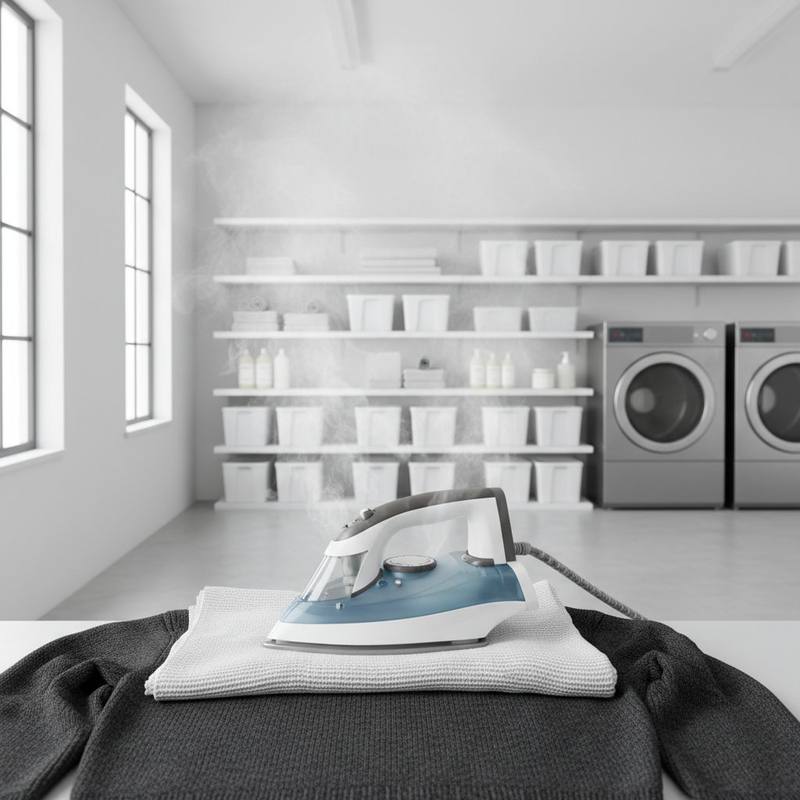
Choose the lowest temperature setting, marked with one dot, before the iron touches the fabric. Starting low and adjusting up is safer than correcting downward after spotting damage.
- 4
Iron through a cloth or on the wrong side
A damp cotton cloth spreads the heat and protects the fiber from direct contact with the hot sole. Keep the iron moving at all times, never resting it in one spot.
- 5
Let the fabric cool before folding
Nylon only regains its full stiffness once it cools, so folding or hanging it right after ironing can set unwanted creases in place.
Care Symbols Important for Polyamide
Drying
Tumble dry, low heat
A square with a circle and one dot inside means machine drying, but only at low temperature, maximum about 60°C inside the drum.
No tumble drying
A crossed-out square with a circle means no tumble drying. Common on down jackets with membrane where dryer heat could damage the coating.
Ironing
Iron to 110°C
An iron with one dot means maximum sole temperature of 110°C. This is the safe upper limit for pure polyamide, best ironed through a damp cloth.
Do not iron
A crossed-out iron appears often on elastane-containing items and laminated coatings, whose structure won't tolerate even low iron temperature.
Bleaching
No chlorine
A crossed-out triangle means absolute prohibition on chlorine bleaching. On polyamide tags this symbol appears almost always because chlorine permanently destroys the amide bonds of the fiber.
Oxygen bleach OK
An empty triangle or triangle marked O2 permits oxygen bleaching, but only within limits and depending on fabric color.
Common Mistakes in Nylon Care
a short summary of what usually ends in melting or discoloration
Nylon at a Glance
Do
- Check the tag and polyamide percentage before every wash
- Iron through a damp cloth or on the wrong side of the fabric
- Test the temperature on a hidden spot before the whole batch
- Dry on low heat or air-dry instead of using a hot tumble cycle
Don't
- Don't tumble dry polyamide above 60-70°C
- Don't press pure polyamide with a hot mangle
- Don't direct steam straight at coatings and membranes on technical jackets
- Don't leave a hot iron resting on the fabric without moving it
When to Hand Nylon to a Professional Laundry
signs that mean a home fix will only make the damage worse
Signs You Shouldn't Risk It Yourself
A glossy, hardening patch on the fabric after ironing means the fiber has started to melt, and no amount of home ironing will undo it. Technical jackets with a membrane or waterproof coating deserve the same caution: steam and high heat can permanently damage the coating even when the nylon itself looks untouched. If you're not sure about the fabric blend, the elastane content, or the type of coating, it's safer to hand the item to a professional laundry that can match the temperature and method to the actual material instead of guessing.
Before pressing a whole batch of clothes, test on a hidden spot, like an inside seam, for 3-5 seconds. If the fiber doesn't wrinkle or start shining, the temperature is safe. Always press through a damp cotton cloth or on the wrong side of the material, never directly with a hot, dry iron sole.

Now you know the theory. Practice can be less forgiving.
If you would rather not risk your favourite piece, leave it to the specialists at Gorące Żelazko laundry in Lublin.


Frequently asked questions
Maximum 110°C, marked as "one dot" on the tag. For blends with elastane, go even lower to about 90-100°C, and always iron through a damp cloth.
Unfortunately melting of thermoplastic fiber is irreversible under home conditions. If you notice a glossy, hardening spot during ironing, stop immediately and remove the iron: further pressing only makes the damage worse.
PA6 (Perlon) is more elastic and melts around 215-220°C, dominant in Europe. PA66 (nylon 66) is stiffer, withstands higher temperatures around 255-265°C, and is dominant in the USA as DuPont's original invention. For care purposes, the difference mainly matters when ironing and drying.
Yes, but only on low heat, maximum 60-70°C, ideally on a program meant for delicate or synthetic fabrics. Nylon dries quickly anyway thanks to its low moisture absorption, so air-drying on a hanger is just as fast and safer.
Yes. Membranes and waterproof coatings are sensitive to steam and high heat regardless of how well the outer fabric tolerates them. With technical jackets, stick to the lowest settings and avoid directing steam straight at the coating.
About the author
Małgorzata Małecka
Owner of the Gorące Żelazko laundry
Małgorzata Małecka runs the Gorące Żelazko laundry in Lublin. Together with her team, she makes sure customers' clothes, shoes and fabrics come back clean and in the best possible condition.