Smell and stains on faux leather
Two separate problems and two different solutions: how to get rid of chemical smell and safely remove a stain without ruining the coating.

Smell and stains are two completely separate problems that require different approaches. Let us start with smell, because it has one specific source: residual DMF solvents, or volatile organic compounds left over from the PU production process. They can be released for years, even from a supposedly old item.
The second problem, stains, follows completely different rules: what matters most there is reaction time and the type of coating, PU or PVC. Below you will find separate guidance for both situations, including what you should never use.
Where the chemical smell comes from
PU hydrolysis and volatile compounds that airing alone removes only partially
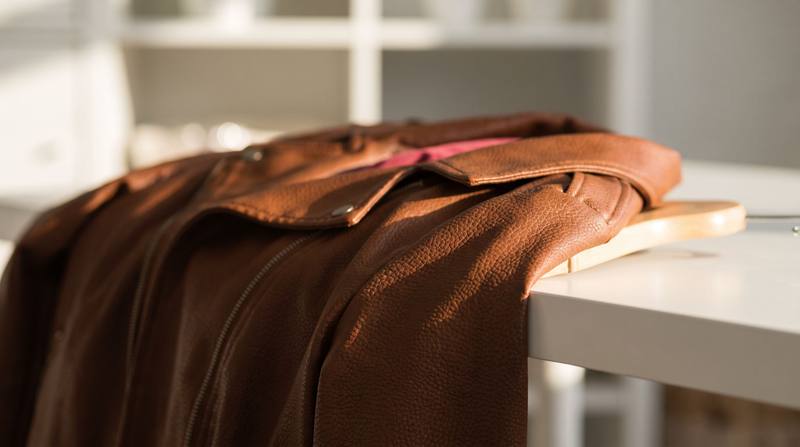
The chemical smell of a new jacket or bag is mainly caused by the production of the polyurethane layer. Manufacturing PU uses solvents, among them DMF, or dimethylformamide, part of which stays trapped in the material and is released slowly over months, sometimes years.
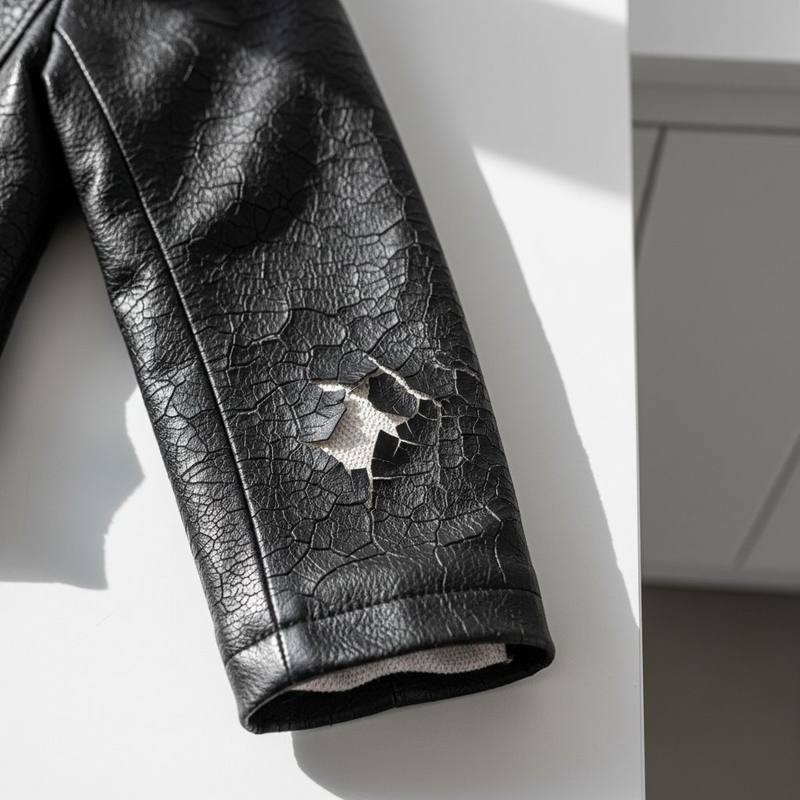
Over time a second mechanism joins in: hydrolysis. Moisture from the air breaks down the polyurethane bonds, releasing volatile compounds with a characteristic sour smell. This is the same process that, at an advanced stage, leads to tackiness and cracking of the coating, so a persistent smell can be an early sign of the material aging.
How to reduce chemical smell at home
- 1
Hang the item in a breezy spot
Best outdoors in the shade, away from direct sun.
- 2
Plan for 24 to 72 hours of airing
A short airing will not do much. For a stubborn smell, count on up to three days.
- 3
Add activated charcoal sachets
It absorbs some of the volatile compounds. Place the sachets right next to the fabric.
- 4
Do not seal the item in an airtight bag
A plastic cover traps the compounds against the material, so the smell only builds up.
Real effectiveness of home airing with activated charcoal is usually 40-60% odor reduction, no more. Professional ozone treatment in a chamber, run for 30-60 minutes, gives 70-90% reduction. With advanced hydrolysis it is not always possible to reach full 100%.
At Gorące Żelazko in Lublin, ozone treatment starts from 30 PLN.
Stains: why reaction time decides everything
a catalog of the most common stains on faux leather, with method and real effectiveness
Reaction time determines the outcome more than the method chosen. Once a stain is set, especially dyes and fats, the effectiveness of any method, home and professional, drops immediately by 40-60%. The sooner you react, the better your chance of the stain vanishing without a trace.
Catalog of stains on faux leather
Fresh grease
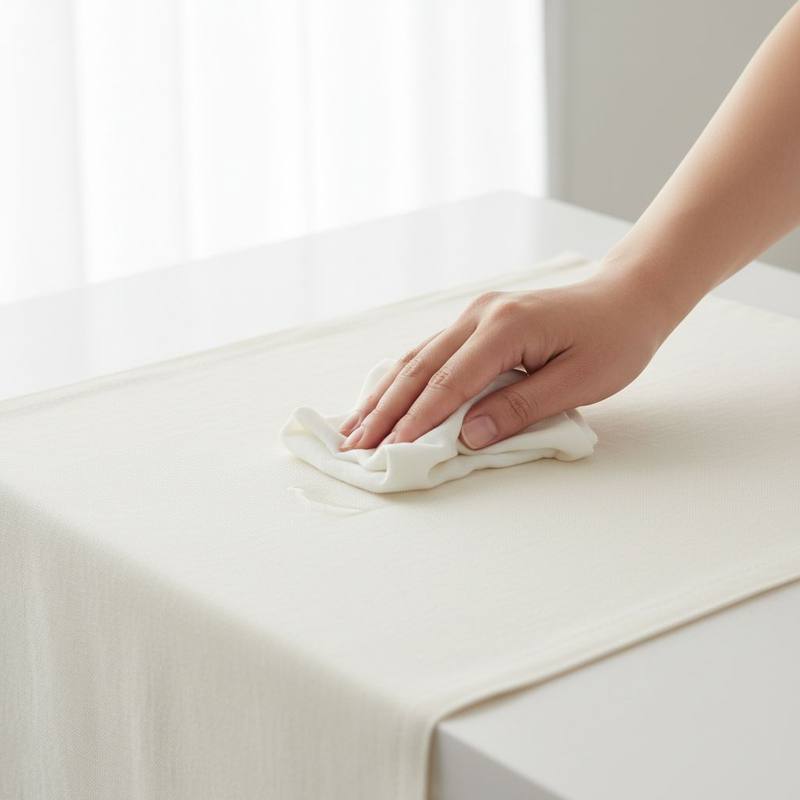
Cloth dampened with water plus a few drops of gentle dish soap at pH close to 7. Home effectiveness 60-70%, professionally enzymatic detergent with contactless steam gives 85-95%.
Ink, gel pen
Cotton swab with isopropyl alcohol at concentration below 20%, wiping gently from stain edge toward center.
Home effectiveness is only 30-50%, with real risk of smudging. Never use acetone or nail polish remover.
Fresh blood
Cold water below 20°C, gentle detergent at pH 6.5-7.5.
Warm water fixes the protein: coagulation begins around 40°C, so under no circumstances reach for warm water.
Coffee, tea
Act within 30 minutes of staining, with neutral pH agent plus enzyme.
Tannins set very quickly, especially on light-colored material.
Long-term sweat
Agent at pH 6.5-7.0, matched to natural sweat pH (4.5-6.5).
Months of direct contact weakens adhesive between material layers, not just the surface.
Dye bleeding from jeans
Paste of baking soda and water, left on surface for 10 minutes.
Home effectiveness is only 20-30%. Stains set by heat are practically unremovable, even professionally.
Cleaning stains on faux leather in a nutshell
Do
- Test the product on a hidden spot first
- Blot the stain with a soft cloth from the edge toward the center
- React right away, before the stain sets
- Dry the item away from radiators and sunlight
Don't
- Never use acetone or nail polish remover
- Never reach for warm water on blood or protein stains
- Never scrub the surface with an abrasive sponge or brush
- Never use chlorine bleach or strong alcohol
Acetone or nail polish remover used on paint or marker stains dissolves the PU or PVC top layer within seconds, in an irreversible way. Similarly, isopropyl alcohol above 70%, used repeatedly for example for disinfection, decolorizes and dulls the surface.
When to take it to a laundry instead of experimenting
If the stain is old, extensive, or on a light, delicate coating, the risk of cleaning it yourself grows faster than your chance of success. The same goes for a situation where the material already shows early signs of aging: tackiness, small cracks, or dullness at fold lines. In that case, professional selection of method for the specific coating type, PU or PVC, gives a much better chance of fully removing the stain without risk to the material.
Preventing the problem ahead of time
It is worth airing a new faux leather item even before you first wear it, rather than waiting until the smell becomes bothersome. Regular gentle cleaning as you go, instead of putting it off until a stain sets, makes it much easier to keep the material in good condition for years.

Now you know the theory. Practice can be less forgiving.
If you would rather not risk your favourite piece, leave it to the specialists at Gorące Żelazko laundry in Lublin.


Frequently asked questions
Airing for 24-72 hours in a breezy place, supported by activated charcoal, gives 40-60% odor reduction. Professional ozone treatment gives 70-90% reduction, though it rarely removes the smell completely.
Grease: water with a few drops of dish soap, 60-70% effectiveness. Pen: isopropyl alcohol below 20%, wiping from the edge, 30-50% effectiveness. Never use acetone.
Never use acetone, solvents, chlorine bleach or high-strength alcohol, because they dissolve or dull the PU coating. Skip abrasive sponges and brushes too, and blot stains with a soft cloth from the outside in.
No. It is a permanent breakdown of polyurethane bonds caused by moisture, and no home or professional treatment can undo it. The process can only be slowed by storing the item in a dry place, away from heat sources.
When the stain is old or extensive, when it is on a light coating, or when the material already shows signs of aging, like tackiness or cracks. Professional cleaning matches the method to the coating type and reduces the risk of damage.
About the author
Małgorzata Małecka
Owner of the Gorące Żelazko laundry
Małgorzata Małecka runs the Gorące Żelazko laundry in Lublin. Together with her team, she makes sure customers' clothes, shoes and fabrics come back clean and in the best possible condition.