Ironing wool step by step
why steaming is safer than direct contact with the iron, an analysis of heat damage

Ironing is the least risky stage of wool care, as long as you avoid one mistake: direct contact between a hot soleplate and dry fabric. The rule is: steam and pressure, not temperature and friction. Below you will find the exact temperature, the step-by-step technique, and the moment when it is better to hand a wool garment to a laundry than to risk it yourself.
Why wool is sensitive to a hot iron
temperature, friction and the fiber structure worth knowing before ironing
After the tense section on drying comes good news: ironing is the least risky stage of wool care. The danger isn't in the idea of ironing itself, but in one specific mistake: direct contact between a hot soleplate and dry fabric.
Dry heat damage only starts to appear above 100°C. That's more than the safe iron temperature for wool (110°C at the single-dot setting), so the margin is narrow. Which is why the rule is: work with steam and pressure, not temperature and friction.
Wool fiber also has a scale-like structure, similar to roof tiles. Hot friction lifts these scales and catches them against one another, which is exactly the same mechanism responsible for felting in a washing machine. That's why dragging a hot iron across wool can be riskier than the contact with heat itself.
Parameters for safely ironing wool
Maximum 110°C, iron setting with the single-dot wool symbol
Always damp, cotton, placed between the soleplate and the fabric
Press down and lift with steam, never slide or rub across the surface
A moment for the garment to cool before moving or folding it
Step by step: how to iron wool safely
four steps that protect the fiber from scorching and felting
The goal in ironing wool is steam and gentle pressure, not high temperature or dragging the iron across the fabric. Four steps are enough to do it safely.
- 1
Choosing the temperature
Set the iron to the "wool" symbol, one dot, maximum 110°C. A higher temperature risks scorching and permanently stiffening the fiber, which no amount of washing can undo.
- 2
A damp pressing cloth
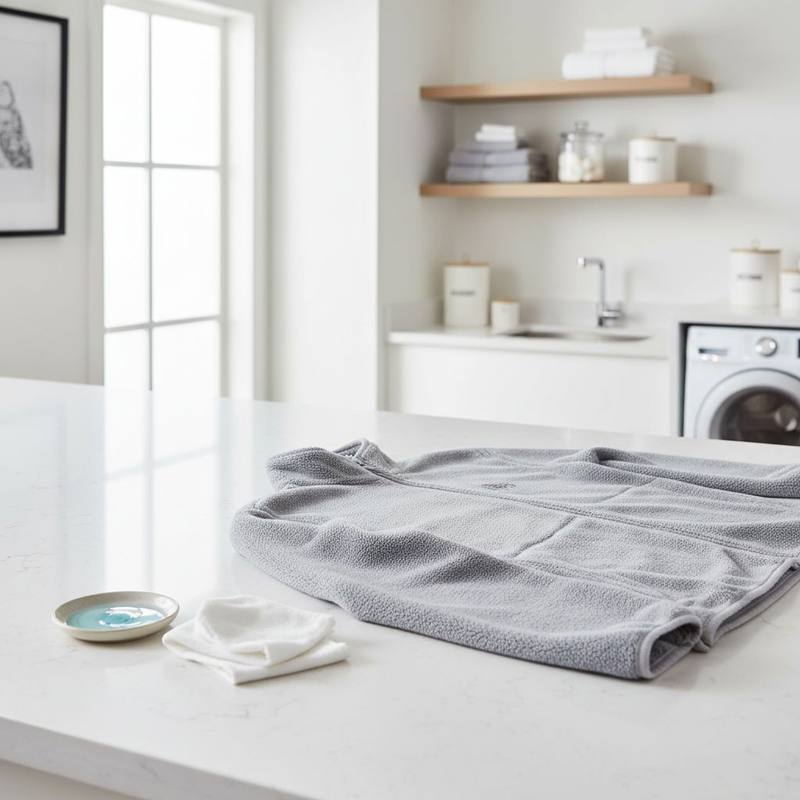
Always place a damp pressing cloth between the soleplate and the fabric. It transfers steam to the fiber while protecting it from direct contact with the hot metal. A plain cotton cloth or pillowcase works fine.
- 3
Pressing technique
Press the iron down and lift it with steam, instead of sliding and rubbing it across the surface. Friction combined with heat is exactly the combination that promotes felting and lifts the fiber's scales.
- 4
Letting the fiber set
Leave the garment to cool for a moment before moving or folding it. The fiber only "sets" into its new shape once it has cooled; moving it too soon can undo the effect of pressing.
Ironing wool in a nutshell
Do
- Set the iron to maximum 110°C, the single-dot symbol
- Always iron through a damp pressing cloth between the soleplate and the fabric
- Press the iron down with steam instead of sliding it across the surface
- Let the garment cool before folding or hanging it
Don't
- Don't touch dry wool with a hot soleplate without a pressing cloth
- Don't slide or rub the iron across the fabric
- Don't iron wool right after washing while it's still soaked through
The most common ironing mistake with wool
The biggest risk isn't the high temperature alone, but the combination of a hot soleplate and direct friction on dry fabric. That contact leaves shiny, flattened patches that another pass of the iron won't undo, and in extreme cases leads to scorching the fiber. If you notice a shiny mark left by the iron, stop ironing that spot, because further attempts will only make it worse.
When you don't need an iron at all
shower steam and a professional vacuum press as alternatives
If you want to freshen up a sweater without ironing, hang it in the bathroom during a hot shower. Ambient steam relaxes the fibers more gently than an iron, with no risk of scorching. Professionally, vacuum steam presses are used, which draw off excess steam while stabilizing the fibers at the same time, leaving no shine on the surface the way dry home ironing does.
When to hand a sweater to a laundry instead of ironing it yourself
precious wool, large surfaces and visible marks left by an iron
Thin cashmere, alpaca or wool blended with silk tolerate ironing mistakes worse than an ordinary sheep's wool sweater, because their fiber is more delicate and deforms more quickly. Large surfaces, like wool coats or suits, are similarly harder to lay flat evenly under a home iron, so the risk of an uneven result grows with the size of the fabric.
If a garment already shows a shiny mark left by the iron, a flattened or slightly felted patch, home ironing won't fix that, and another attempt may only deepen the damage. In that case it's better to hand the item to a professional laundry, which has a vacuum press and matches the parameters to the specific fabric.

Now you know the theory. Practice can be less forgiving.
If you would rather not risk your favourite piece, leave it to the specialists at Gorące Żelazko laundry in Lublin.


Frequently asked questions
Maximum 110°C, always through a damp pressing cloth between the soleplate and the fabric. Direct contact between hot metal and dry wool risks scorching.
Better not. Steam alone is safe, but without a damp cloth it's easy to touch the fabric with the hot soleplate, risking shine and scorching. A cloth protects the fiber and spreads steam evenly.
Hang the garment in the bathroom during a hot shower. Ambient steam gently relaxes the fibers and smooths creases with no risk of scorching.
The rules for temperature and the pressing cloth are the same, but the thinner fiber of cashmere and alpaca deforms more quickly, so the margin for error is smaller. For more precious fabrics it's worth considering a professional laundry instead of ironing at home.
The telltale sign is a shiny, flattened patch shaped like the soleplate, sometimes with a stiffened section of fabric. Another pass of the iron won't undo that mark, so at the first signs it's better to stop and consult a laundry.
About the author
Małgorzata Małecka
Owner of the Gorące Żelazko laundry
Małgorzata Małecka runs the Gorące Żelazko laundry in Lublin. Together with her team, she makes sure customers' clothes, shoes and fabrics come back clean and in the best possible condition.