Wool, cashmere, acrylic or fleece
what actually differs in warmth, odor and ease of care across these four materials

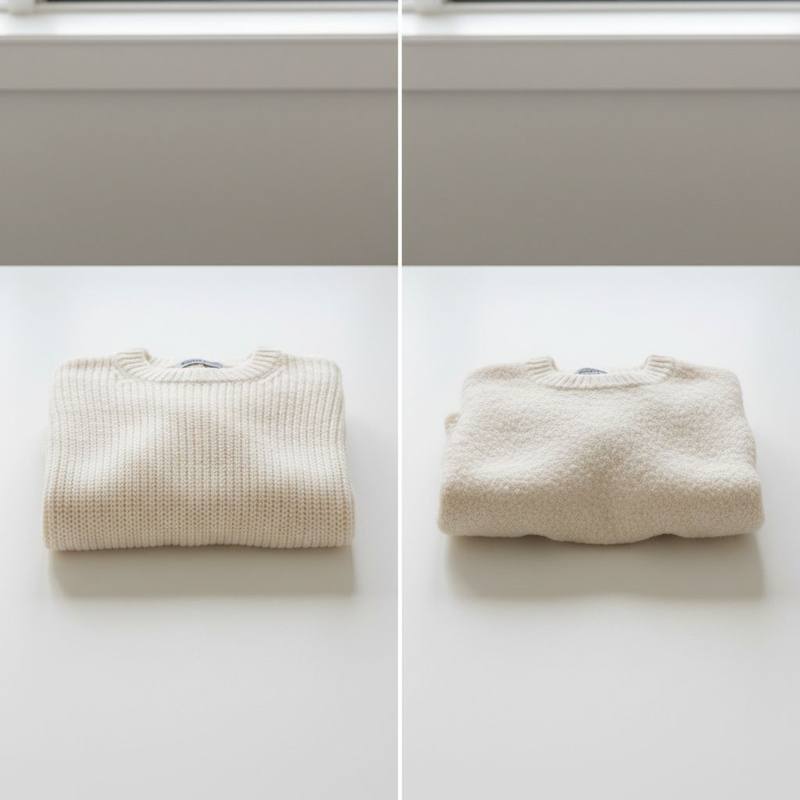
Wool, cashmere, acrylic and fleece keep you similarly warm, but they differ in care and in how they handle odor. Below we compare them head-on to make choosing the right fabric easier.
The differences come from fiber structure: wool and cashmere are protein fibers of animal origin, while acrylic and fleece are synthetic materials made from petroleum-based polymers. That one difference carries through to everything, warmth, washing and how quickly the fabric starts to smell.
Where the difference in warmth and fiber structure comes from
Wool wins where real warmth at low weight matters, even though it needs more careful care than most synthetics. It also has natural odor resistance, coming straight from the fiber structure described above. It's no accident that, despite cheaper alternatives, you still reach for a wool sweater in winter.
Cashmere is warmer at the same thickness, but noticeably more delicate and harder to care for, because its fiber is thinner and shorter than sheep's wool. Acrylic and fleece are easier to throw in an ordinary washing machine without much risk. What you pay for that is worse breathability and more static.
Wool compared to cashmere, acrylic and fleece
wool very good, cashmere best but with a fragile structure, acrylic weak, fleece good but static
wool and cashmere natural, thanks to a scale structure that limits bacteria, acrylic and fleece absorb and hold odor longer
acrylic and fleece unrestricted, wool requires 30°C, cashmere the most demanding of the four
worsted wool and acrylic the most resistant, cashmere and woolen (carded) wool the most prone to damage
Odor and static: what's behind them
Wool and cashmere fiber is covered in a microscopic layer of scales, resembling roof tiles, that makes it harder for odor-causing bacteria to settle on the surface. On top of that comes high moisture absorption: protein fiber absorbs water vapor, so bacteria have a harder time multiplying.
Synthetic fibers, such as acrylic and fleece, have a smooth, nearly impermeable surface. Sweat and skin oils sit on it instead of soaking into the structure, so the fabric dries more slowly from within and starts to smell sooner. That same low moisture absorption is behind static cling, especially in winter, when heating dries the indoor air even further.
Four materials side by side
Wool
protein fiber
Combines high warmth with natural odor resistance. Requires washing at low temperature and limited spinning.
Cashmere
cashmere goat down
Warms the most at the lowest weight, but the thin fiber felts easily. Requires the most careful washing of the four.
Acrylic
polyacrylonitrile
Mimics the look of wool more cheaply and washes without restrictions, but it warms less and starts to smell sooner. Sensitive to a hot iron.
Fleece
polyester
Warms better than acrylic and dries exceptionally fast after washing. It builds up more static and handles odor worse.
Washing and ironing: differences in everyday care
Basic washing and ironing rules
Four materials, four different washing and ironing regimes.
Wool and cashmere: wash at 30°C, wool cycle
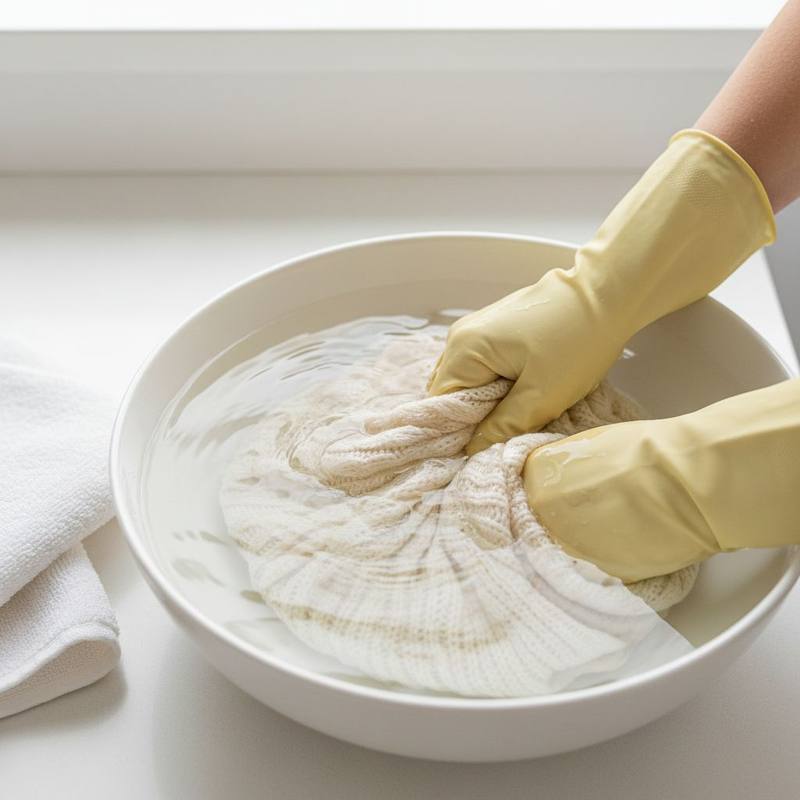
A low temperature and a gentle detergent protect against felting. Hand washing remains the safest option for cashmere.
Wool and cashmere: no tumble dryer
Heat and friction in the dryer speed up felting. Dry flat, away from a radiator and sunlight.
Acrylic and fleece: wash at 30-40°C
Both materials handle an ordinary machine cycle and normal spinning without much risk.
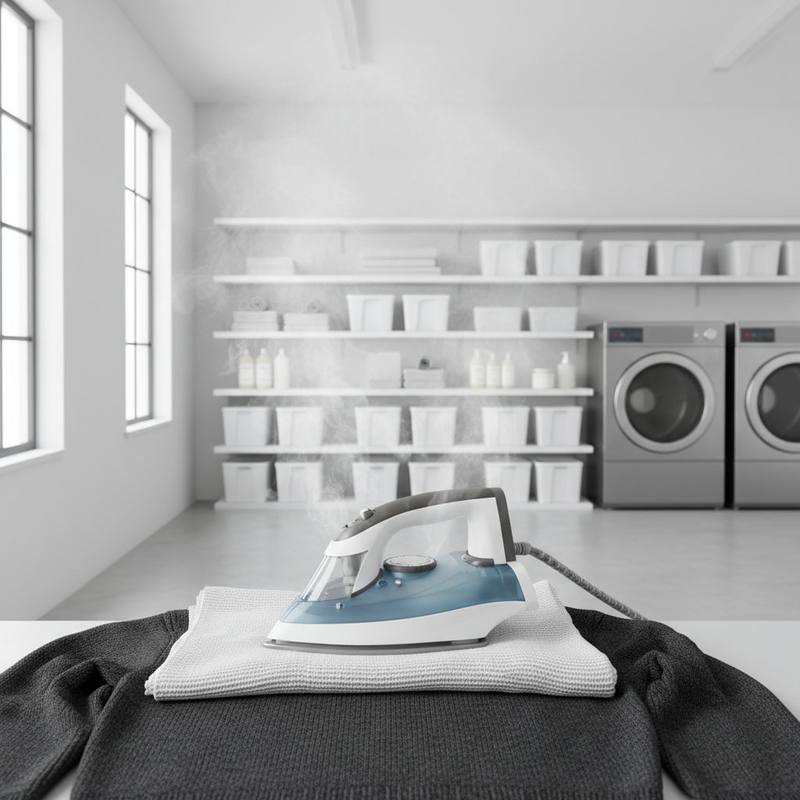
Acrylic: low ironing temperature or none at all
Acrylic is a thermoplastic material and can melt under a too-hot iron. Fleece usually needs no ironing at all.
What to choose each material for
Ultrafine merino wool works best for thermal underwear and sports. It combines warmth with moisture management better than most synthetics and doesn't hold odor after exercise.
For suits and coats, worsted wool is the better choice, because surface smoothness and pilling resistance matter more here than maximum softness.
Reserve cashmere for things that prioritize softness, such as scarves or sweaters for special occasions, not everyday wear.
On a lower budget, acrylic or fleece will do the job, at the cost of worse breathability and more frequent static.
Caring for wool, cashmere, acrylic and fleece in a nutshell
Do
- Wash wool and cashmere at 30°C, on the wool cycle
- Dry wool and cashmere flat, never in a tumble dryer
- Wash acrylic and fleece on an ordinary machine cycle
Don't
- Don't wring out wet wool or cashmere
- Don't iron acrylic at a high temperature
- Don't dry fleece in a hot dryer
When damage becomes irreversible
Felting of wool and cashmere is irreversible: fiber scales interlock permanently under heat, moisture and friction, so the fabric can no longer be stretched back to its original size. Acrylic can melt or gain a permanent sheen under a too-hot iron or a hot dryer. When unsure about the temperature, choose a safer setting than the one on the care label.

Now you know the theory. Practice can be less forgiving.
If you would rather not risk your favourite piece, leave it to the specialists at Gorące Żelazko laundry in Lublin.


Frequently asked questions
Mainly fiber thickness: merino is 15-22 µm, while standard crossbred sheep's wool is 27-35 µm. A finer fiber means more softness, but more delicate care.
Lambswool comes from a lamb's first shearing, with a thicker and more resilient fiber (23-28 µm) than merino. Its intact fiber tips give it higher pilling resistance.
It's wool from Shetland sheep, raised on the Shetland Islands in a subarctic climate. Natural sheep lanolin gives it partial hydrophobicity.
Largely yes, if price and easy washing matter most, but acrylic warms less and starts to smell sooner. For sports, merino wool works better.
Both are synthetics, but fleece is usually polyester with a different knit structure, giving better insulation and faster drying than acrylic. Acrylic tends to be cheaper and looks more like wool.
About the author
Małgorzata Małecka
Owner of the Gorące Żelazko laundry
Małgorzata Małecka runs the Gorące Żelazko laundry in Lublin. Together with her team, she makes sure customers' clothes, shoes and fabrics come back clean and in the best possible condition.