Wash it yourself or take it to the laundry
when even careful home care for alpaca still carries too much risk for delicate fiber

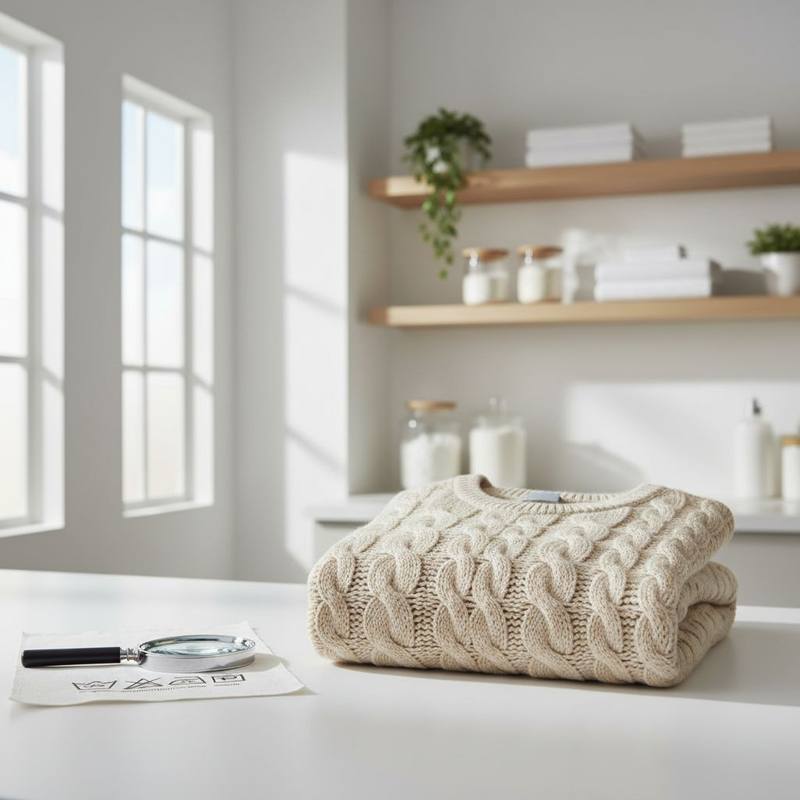
After going through all this material, you already know what proper hand washing of alpaca looks like step by step: lukewarm water, a gentle wool detergent, no wringing, drying flat. That procedure is safe for most everyday sweaters and scarves.
There are, however, situations where even a perfectly executed home procedure carries too much risk to attempt. Below are five signals after which it is simply better to hand the item to a specialist instead of counting on the best-case scenario.
Five signals that it is better to take your alpaca to a laundry
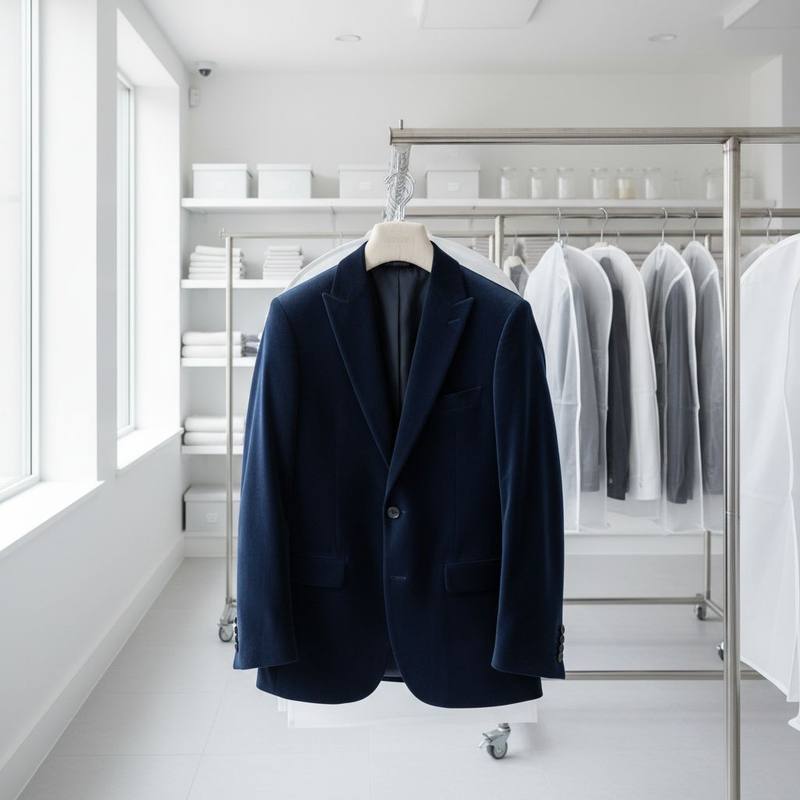
- Label showing dry clean only. This applies especially to coats, blazers, and other items with linings stiffened by glue or interfacing, which water could unglue or warp beyond repair.
- A dried or unknown stain. Home soaking without knowing what caused the stain often sets the mark instead of removing it, because without knowing the stain type it is easy to pick the wrong method and temperature.
- Large and heavy items, such as a blanket or a long coat. Water-soaked fabric weighs many times more than dry fabric, and hanging it to dry at home risks stretching under its own weight.
- High-value items in Royal or Baby Alpaca grades. The thinner and more delicate the fiber, the smaller the margin for error, and the cost of a failed attempt, namely felting or stretching, usually exceeds the cost of professional service.
- Visible early signs of felting or pilling. The sooner an item reaches a specialist, the greater the chance of partially loosening the structure before the problem spreads across the whole front or sleeves.
Why a laundry handles it better than home
Controlled temperature
Water maintained in a narrow range of 20 to 30 degrees Celsius with machine precision, eliminating the risk of thermal shock that home hand washing carries.
Gentle spin
Speed on the order of hundreds of revolutions per minute instead of the 800 to 1200 typical of home washers, minimizing mechanical deformation of wet fiber.
Dry cleaning for symbol P
Hydrocarbon or perchloroethylene-based solvent doesn't cause fiber swelling, eliminating the felting risk typical of water washing.
Professional spot removal
Flushing technique, namely localized rinsing with suction, prevents the halo effect typical of home spot treatment.
Baby Alpaca, Royal Alpaca, Huacaya, Suri: what the label tells you
Huacaya
about 90% of population
Huacaya is the most common type of alpaca. Its fleece is fluffy and springy, making it a versatile choice for everyday sweaters and scarves.
Suri
about 10% of population
Suri has a unique, silky texture and a distinct sheen. Because it is rarer, it mostly ends up in higher-end pieces.
Baby Alpaca, Royal Alpaca, and Superfine are names of fiber quality grades, not the animal's age or a specific breeding line. Baby Alpaca means fiber thickness around 19 to 23 microns, thin enough not to feel prickly against the skin. Royal Alpaca and the Superfine grades go even finer, toward the most delicate and most valuable portions of the fleece.
The thinner the fiber, the more susceptible it is to mechanical damage. Rubbing, wringing, or too aggressive spinning permanently deforms thin, delicate strands more easily than the coarser fiber of standard alpaca. That is why items from the higher quality grades are worth treating as near-automatic candidates for professional cleaning, regardless of whether the label allows water washing.
What happens when you delay the decision
Felting is largely an irreversible process. Under the effect of heat, moisture, and friction, the scales on the surface of the protein fiber open up and interlock with each other, pulling the material into a dense, harder structure. In the early stage this shows up as light pilling, namely small bobbles on the surface in the areas with the most friction: under the arms, on the cuffs, on the back under a bag strap.
If the problem is ignored, the bobbles multiply and start clumping into larger patches, and the fibers underneath lose their original elasticity. At this stage, trying to comb it out or shave off pilling with a razor at home risks thinning the material or creating holes. A professional with the right tools has a better chance of partially loosening the fiber structure, but only if the item reaches them before the felting covers the whole surface.
What not to do yourself once you spot a problem
Do not rub a stain or scrub a felted spot with a brush, because friction only speeds up fiber matting. Do not dry alpaca in a tumble dryer and do not reach for hot water for home spot treatment, because the combination of heat and mechanical motion is exactly the condition under which protein fiber felts fastest. If the stain is fresh, it is enough to gently blot it with a clean, absorbent cloth and leave the rest to a specialist.
Alpaca: the decision in a nutshell
Do
- Check the label before washing: a dry clean only symbol is a clear signal to take the item to a laundry
- Note what caused the stain and when, it makes choosing the right method at the laundry easier
- Blot a fresh stain with a clean cloth instead of scrubbing
- Take the item in right away at the first signs of pilling, before it spreads over a larger area
Don't
- Do not wring wet alpaca or dry it in a tumble dryer
- Do not try to remove a dried or unknown stain yourself
- Do not put off the decision once you see the first pilling bobbles
- Do not dry large, heavy items on a hanger
Gorące Żelazko laundry in Lublin handles sweaters, scarves, blankets, and coats made from alpaca, selecting the water washing or dry cleaning program for the specific item and its care symbols.
Estimate prices: sweater washing from 40 PLN, coat cleaning from 70 PLN. The laundry is open: 9:00–17:00.

Now you know the theory. Practice can be less forgiving.
If you would rather not risk your favourite piece, leave it to the specialists at Gorące Żelazko laundry in Lublin.


Frequently asked questions
Baby Alpaca is a fiber quality grade of about 19 to 23 microns thickness, not wool from young animals. This is a common misunderstanding: the name describes fiber fineness and softness, and an adult alpaca can produce Baby Alpaca grade fleece throughout its life.
Huacaya (about 90% of population) has dense, curly fleece with natural waviness, similar in structure to sheep's wool. Suri (about 10% of population) has straight, silky shiny fiber falling in long locks, is rarer and more expensive.
Take it to a laundry when the label indicates dry cleaning only, or if there are dried or unknown stains. Professional help is needed for large, heavy items like blankets or coats, high-value Royal or Baby Alpaca items, and when you see the first signs of felting or pilling, since washing it yourself at that point can only make the damage worse.
Only partly, and only at an early stage. Professional loosening of the fiber structure is sometimes possible while pilling is just appearing, but heavily matted, felted patches usually stay permanently changed. That is why a fast reaction matters, not waiting for the problem to disappear on its own.
Sweater washing at Gorące Żelazko laundry starts from 40 PLN, and coat cleaning from 70 PLN. The exact price depends on size, how soiled the item is, and the chosen cleaning method.
About the author
Małgorzata Małecka
Owner of the Gorące Żelazko laundry
Małgorzata Małecka runs the Gorące Żelazko laundry in Lublin. Together with her team, she makes sure customers' clothes, shoes and fabrics come back clean and in the best possible condition.