Daily Care and Storage
How to extend the life of your favorite viscose items with proper washing, drying, and storage away from sunlight and moisture

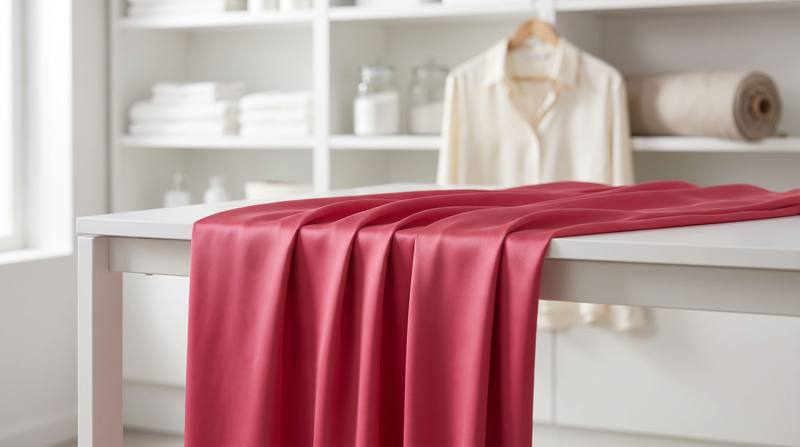
Daily care of viscose doesn't end with washing. Store clothes away from direct sunlight and moisture: prolonged exposure leads to color fading, and with damp storage, also to possible yellowing.
Knitwear is better folded than hung for long periods, because hanging on a hanger stretches it under its own weight, this time not in washing, but in the closet.
Because viscose wrinkles more easily than cotton, it's worth hanging it right after taking it off, before wrinkles set in, and steaming it if needed. This one simple habit saves a lot of time on later ironing.
Why viscose fades and loses shape
the cellulose fiber structure behind its sensitivity to moisture and light
Viscose is a regenerated cellulose fiber, made from natural cellulose that is chemically processed and re-formed into a filament. This structure means the fiber absorbs moisture far more readily than cotton, while also having a weaker internal structure when wet than fibers that grow whole. That's why viscose loses a significant share of its strength on contact with water, which in practice shows up as wet fabric stretching more easily under its own weight, for example while a damp garment hangs to dry.
Color fading is a separate mechanism, driven mainly by light. Sunlight gradually breaks down the dye molecules bonded to the fiber, and the process speeds up when combined with heat and moisture, which encourage oxidation. That's why the same blouse left hanging for months right by a window will noticeably fade faster than an identical piece stored in a closed wardrobe, away from light.
Viscose, By the Numbers
20 to 30°C
max. 400 to 600 rpm
never tumble dry
up to 110°C, with steam or cloth
up to 50 to 70%
always prohibited
Folding or hanging on a hanger
one rule for knits, another for woven blouses and dresses
The “fold your knits” rule applies to sweaters, cardigans, and dresses made of viscose knit fabric, because it's the loose loop structure that stretches fastest under the weight of the material. Blouses, shirts, and dresses made of woven viscose behave differently: they hold up well on a hanger, as long as it's a wide, shaped one, ideally wooden or padded. A thin wire hanger leaves marks on the fabric at the shoulders over time, creating small bumps that are hard to iron out.
Another difference is what sits next to viscose in the wardrobe. Heavy garments, like coats or thick sweaters, shouldn't rest directly on viscose, because they press down on it and set in wrinkles. If wardrobe space is tight, it's better to carefully fold a delicate item into a drawer than to squeeze it between bulkier layers of clothing.
Preparing viscose for longer storage
four steps before a garment goes into the closet for the season
- 1
Wash and dry it thoroughly
Even a faint trace of sweat or leftover detergent can set into the fiber over time and lead to yellowing. Before long-term storage, viscose needs to be completely dry, not just dry to the touch on the surface.
- 2
Iron or steam it smooth
Wrinkles that set in over months in the closet are harder to iron out than fresh ones. A light steam pass before storage saves work the next time the garment is worn.
- 3
Choose breathable packaging
A cotton bag or a cover with ventilation holes works better than sealed plastic film, which traps moisture against the fabric and encourages yellowing.
- 4
Find a cool, shaded spot
A closet away from a radiator and a window protects against color fading and against the fiber drying out in the heat, at the same time.
Caring for viscose before storage
Last wash before storage
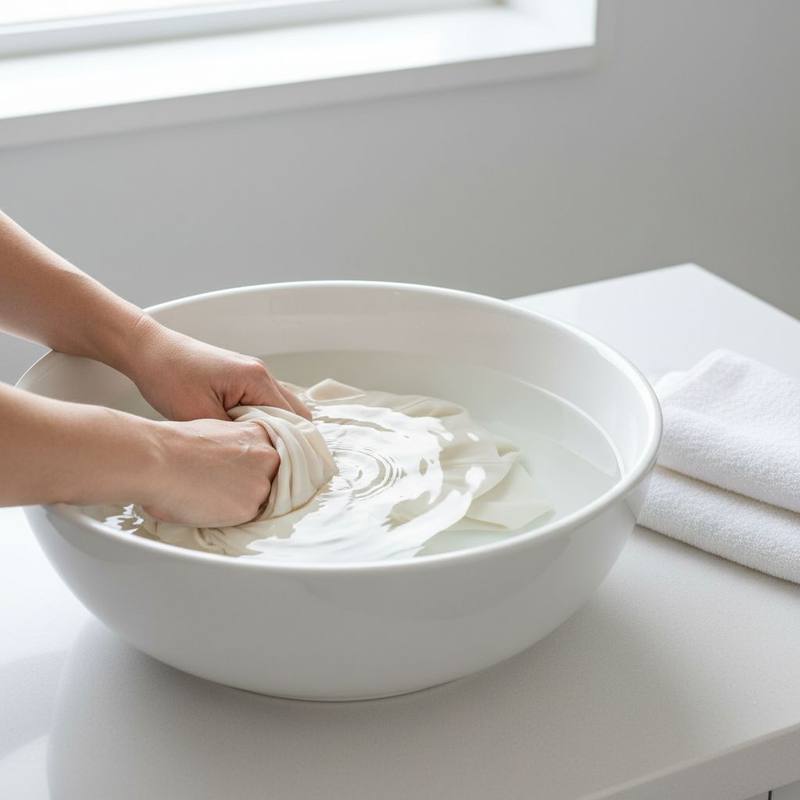
Wash the item at 20 to 30°C on a gentle cycle before it goes into the closet for a while. A thorough rinse removes leftover detergent and sweat that could otherwise set into the fiber over time.
Drying
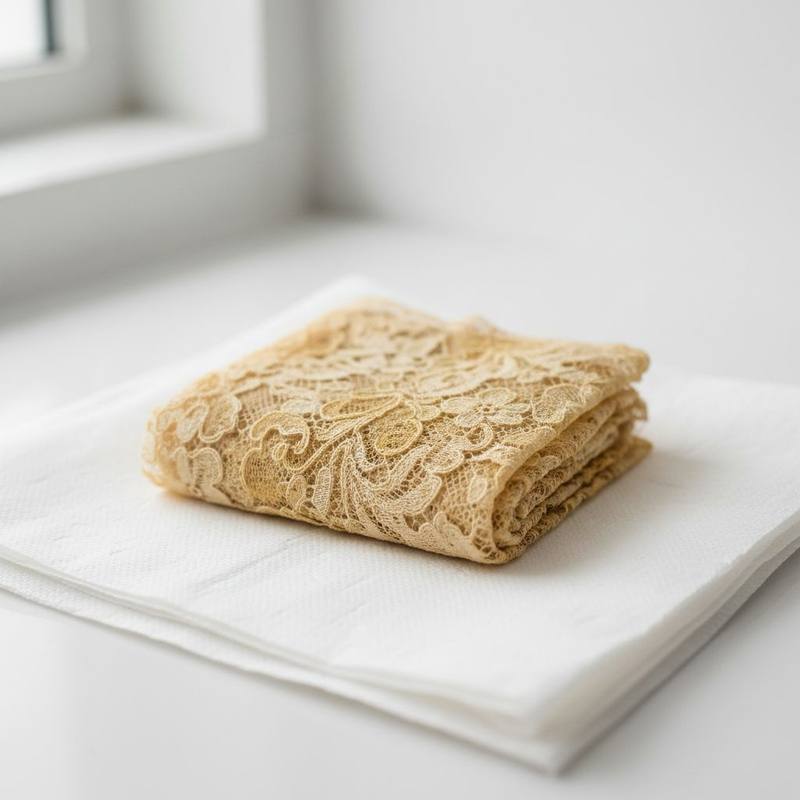
Dry viscose laid flat on a towel or hung up, never in a tumble dryer. The dryer's heat further weakens a fiber that's already sensitive to warmth.
Where to dry and store it
Keep it away from direct sunlight, both while drying and later in the closet. Sunlight breaks down the dye faster than ordinary wear does.
Ironing before storage
Iron at up to 110°C, with steam or through a damp cloth, before the garment goes into the closet. Freshly ironed viscose wrinkles less during storage than a piece folded right after washing.
Storing viscose at a glance
Do
- Store it away from sunlight and moisture
- Fold knits, hang woven blouses and dresses on a wide hanger
- Dry it thoroughly before longer storage
- Hang the garment right after taking it off, before wrinkles set in
Don't
- Don't store viscose that's damp or not fully dry
- Don't tumble dry it
- Don't use chlorine bleach
- Don't leave viscose crushed under heavy sweaters or coats
When home methods aren't enough anymore
If you take a garment out of the closet and see clear yellowing, stiff, dull patches of fabric, or creases so deep that steam from an iron won't smooth them out, don't try to fix it with repeated home washing. Each additional wash further weakens a fiber that's already vulnerable when wet. In that situation, it's better to hand the item straight to a professional cleaner, who can match the temperature and the product to the fabric's actual condition.
Refreshing it after storage
After taking viscose out of the closet, airing it out is usually enough, ideally laid flat for a few hours away from direct sunlight. A light steam pass, or ironing through a damp cloth, smooths out wrinkles and refreshes the fabric's smell at the same time. If the garment still smells musty despite airing, a short wash at a low temperature before the first wear removes the smell more effectively than ironing alone.

Now you know the theory. Practice can be less forgiving.
If you would rather not risk your favourite piece, leave it to the specialists at Gorące Żelazko laundry in Lublin.


Frequently asked questions
Much less than polyester or nylon. The high moisture absorption of viscose (regain 11 to 13%) means the fiber naturally dissipates static charges better than dry, synthetic fabrics.
It works well. The high moisture absorption of viscose means the fabric effectively transports moisture from the skin surface, making it pleasant and “breathable” on warmer days.
Pure viscose fiber is low-allergen because it contains no proteins. The real risk lies in chemical finishes like formaldehyde resins. People with sensitive skin should choose viscose with OEKO-TEX Standard 100 certification and always wash new clothing before wearing.
In a dry, shaded spot with breathable packaging, viscose can safely wait in the closet for a whole season, or even longer. What matters most is drying it thoroughly before storage and avoiding sealed plastic film, which traps moisture against the fabric.
It's not strictly necessary, but it makes wearing it later easier. Freshly ironed fabric wrinkles less during storage than a piece folded right after washing, especially when it sits in the same spot for a longer stretch of time.
About the author
Małgorzata Małecka
Owner of the Gorące Żelazko laundry
Małgorzata Małecka runs the Gorące Żelazko laundry in Lublin. Together with her team, she makes sure customers' clothes, shoes and fabrics come back clean and in the best possible condition.