Storing linen
Seasonal checklist without yellowing and musty smell

As a cellulose fiber, linen absorbs moisture from the air more readily than cotton. In a damp environment, the risk of mold and musty smell grows faster than with cotton. This especially affects seasonal bedding and tablecloths that sit in a cabinet or drawer for months between uses.
The same problem affects linen clothing put away at the end of the season: summer dresses, shirts or blazers waiting in the closet until next summer. The good news is that linen only reacts badly to a few specific storage mistakes, not to storage itself. Below you will find exactly what to avoid and how to prepare linen for months spent in the closet.
Why linen yellows and cracks along folds
moisture, oxidation and fiber structure worth knowing before seasonal storage
Linen's tendency to weaken along fold lines comes from the structure of the fiber itself. The angle of the cellulose microfibrils in linen is very low, which means the fiber stretches poorly and springs back poorly after bending. When bedding or a tablecloth lies folded in the same position for months, the cellulose along the fold line gradually fatigues, and over the years it can crack or wear thin at the next wash.
Yellowing is a separate process. It happens when residual sweat, detergent, starch or ordinary dust oxidizes on the fiber under the influence of air, moisture and light. Even fabric that looks clean can yellow over time if it went into storage not fully rinsed or slightly damp. That is why the two pillars of safe storage are drying thoroughly before putting linen away and periodically changing the fold line.
Storage conditions for linen
Low and stable, without swings. Avoid basements, unventilated attics and bathrooms
Cool and stable, away from radiators and sun-facing cabinets
No direct sunlight, especially for dyed linen, to avoid uneven fading
Free circulation around the fabric, no airtight plastic wrapping
Folding or hanging
different rules for flat bedding and tablecloths than for linen clothing
Linen bedding and tablecloths are better folded than hung, because a large piece of fabric on a hanger stretches under its own weight over time. The key rule is to change the fold line at every seasonal repositioning, ideally alternating lengthwise and crosswise, so the fiber does not fatigue in the same spot every time.
Linen clothing, such as shirts, dresses or blazers, is best hung on a wide, shaped hanger, ideally wooden or padded. The shoulders of the garment then keep their shape, and the fabric does not crease in places you would have to iron before wearing it anyway. A thin wire hanger can distort the shoulder line over a longer storage period.
Preparing linen for seasonal storage
four steps before linen goes into the closet for the long term
- 1
Wash and dry thoroughly
Even slightly damp fabric can develop mold after months in a closed closet. Before storing, linen needs to be completely dry, not just dry to the touch on the surface.
- 2
Skip starching for the season
Starch feeds mold and attracts insects, so it is better to skip it before long-term storage, even if you normally use it to stiffen a tablecloth or shirt.
- 3
Choose a breathable wrap
A cotton pillowcase, a linen bag or a box with ventilation holes work better than airtight plastic film, which traps moisture against the fabric.
- 4
Protect against moths naturally
Lavender sachets, cedar wood or dried chestnuts repel moths without a chemical scent that would soak into the fabric for months.
Bedding and tablecloths versus linen clothing
different priorities for large flat fabrics than for garments
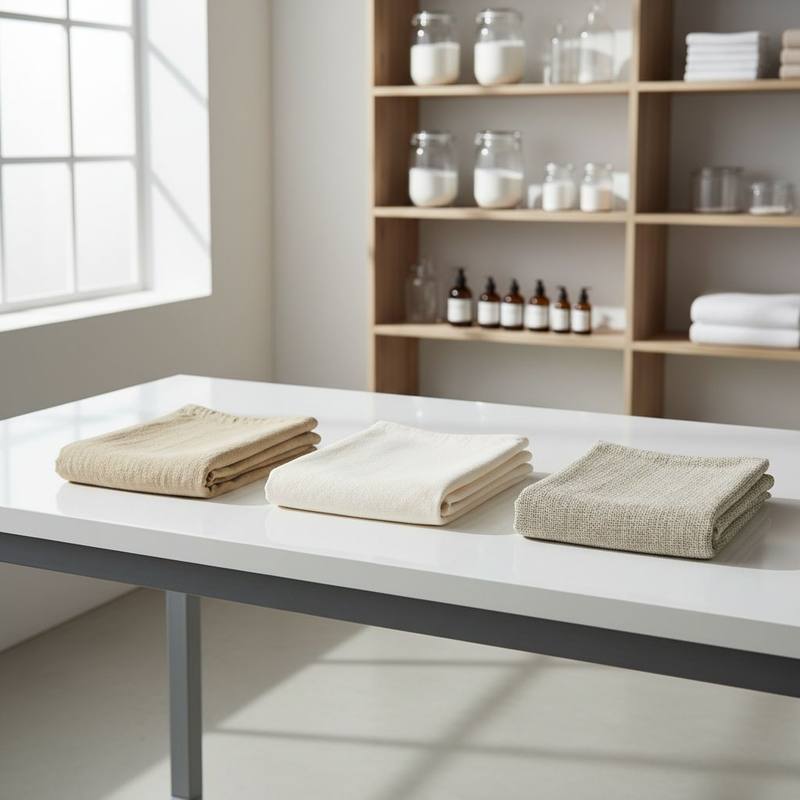
Seasonal linen bedding is best kept folded flat, in a few layers, in a ventilated spot, for example on a dresser shelf with the doors slightly ajar rather than in a tightly closed chest. A tablecloth is worth folding along the same lines used for ironing, so that when it is spread on the table the creases almost straighten themselves out.
Linen clothing worn only seasonally, such as summer dresses or shirts, should be kept separate from heavier fabrics that could crush it on the hanger. If the closet is tight, it is better to fold such a piece carefully in a drawer than to squeeze it between thick sweaters.
Linen storage in a nutshell
Do
- Store in a dry, well-ventilated place
- Fold bedding and tablecloths, changing fold lines periodically
- Hang linen clothing on a rack instead of folding
- Use natural moth repellents like lavender or cedar
Don't
- Don't pack linen in airtight plastic film, which encourages dampness and odors
- Don't store damp linen for long periods
- Don't expose dyed linen to prolonged sun exposure to avoid uneven bleaching
When home remedies are no longer enough
If, after taking it out of storage, you notice a clear musty smell, yellow or brown discoloration along the fold lines, or stiff, dull patches of fabric, do not try to fix it by washing it at home over and over. Washing the same spot repeatedly weakens the already fatigued fiber further. In that case, it is better to hand the piece straight to a professional laundry, which will match the temperature and detergent to the fabric's current condition instead of risking further damage.
Refreshing linen after storage
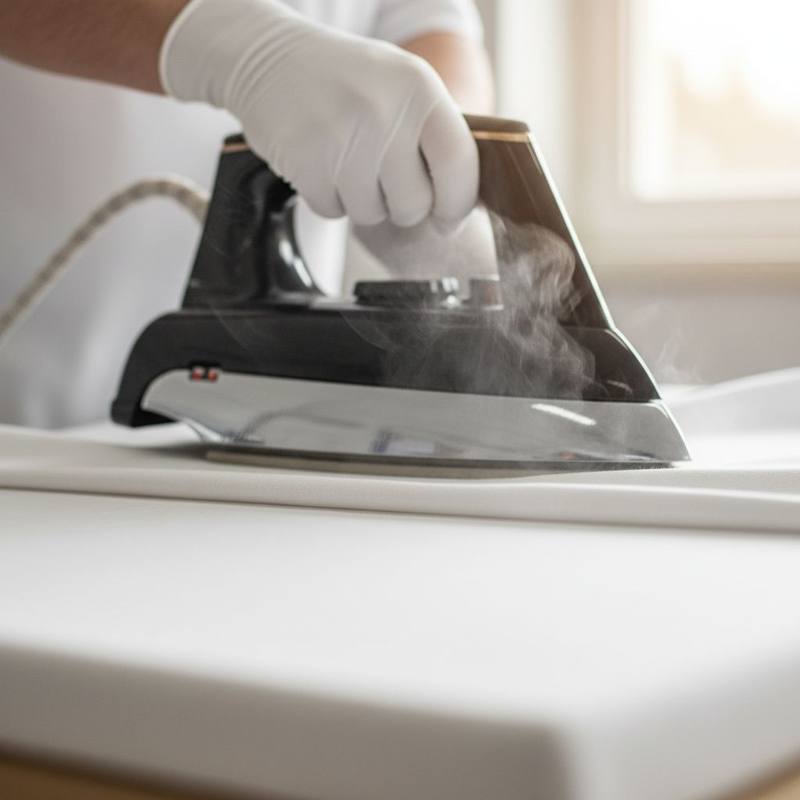
After taking it out of a closet or drawer, linen usually just needs airing, ideally spread out for a few hours in a ventilated room away from direct sunlight. Gentle steam ironing smooths the creases and refreshes the fabric's smell at the same time. If linen still smells musty despite airing, a short wash at low temperature before first use removes the smell more effectively than ironing alone.

Now you know the theory. Practice can be less forgiving.
If you would rather not risk your favourite piece, leave it to the specialists at Gorące Żelazko laundry in Lublin.


Frequently asked questions
Store in a dry, well-ventilated place, completely dry fabric, ideally in a breathable cover, not airtight plastic. Linen as a cellulose fiber absorbs moisture faster than cotton, so the risk of mold and yellowing grows in a damp environment.
Don't pack linen in airtight plastic film, as it encourages dampness and odors. Store it in a dry, well-ventilated place, in a breathable cover, and never while still damp.
Use natural moth repellents like lavender or cedar. Hang linen clothing on a rack instead of folding, and fold bedding and tablecloths while periodically changing the fold line.
Linen fiber has a low cellulose microfibril angle, so it stretches poorly and springs back poorly after bending. After months of storage in the same position, the cellulose along the fold line fatigues, which eventually leads to cracks.
Take the fabric to a laundry when, after taking it out of the closet, it still smells musty despite airing, shows discoloration along the fold lines, or has become stiff and dull. Professional washing matches the temperature and detergent to the fabric's condition instead of risking another home attempt on already weakened fiber.
About the author
Małgorzata Małecka
Owner of the Gorące Żelazko laundry
Małgorzata Małecka runs the Gorące Żelazko laundry in Lublin. Together with her team, she makes sure customers' clothes, shoes and fabrics come back clean and in the best possible condition.