Neoprene Smell and Stains
How to permanently remove odor and clean salt, chlorine or sunscreen

Neoprene odor and surface stains share a common denominator: the closed-cell structure described in our neoprene guide, which makes moisture evaporation difficult and makes soiling harder to remove from the laminate surface. Below are proven ways to handle both problems.
How to remove persistent odor from neoprene
Why odor returns despite washing and how to remove it permanently
If you think the odor from foam returns despite washing, you're probably right, and it's not a mistake. The closed-cell foam structure makes moisture evaporation difficult. This gives bacteria, including species from Staphylococcus and Pseudomonas families, plenty of time to reproduce. They metabolize sweat, urea, and dead skin cells trapped in the foam structure and lining.
Two typical mistakes make this problem worse instead of solving it. These are rinsing only with cold water and no enzymatic detergent, and drying the suit in a closed bag or backpack right after training. Both create exactly the conditions (moisture, warmth, lack of air) where bacteria multiply fastest. The mechanism closely resembles the one behind persistent sweat odor in polyester sportswear, described in our guide Why Polyester Smells Even After Washing.
The key to permanently getting rid of odor is enzymatic detergent, which chemically breaks down sweat proteins rather than perfumed liquid that masks odor temporarily. Equally important is completely drying the foam after every wash, not just after use, as this limits bacterial reproduction between washes.
Stains and soiling on neoprene: how to remove them
Sweat, chlorine, sunscreen and discoloration, separate instructions for each type
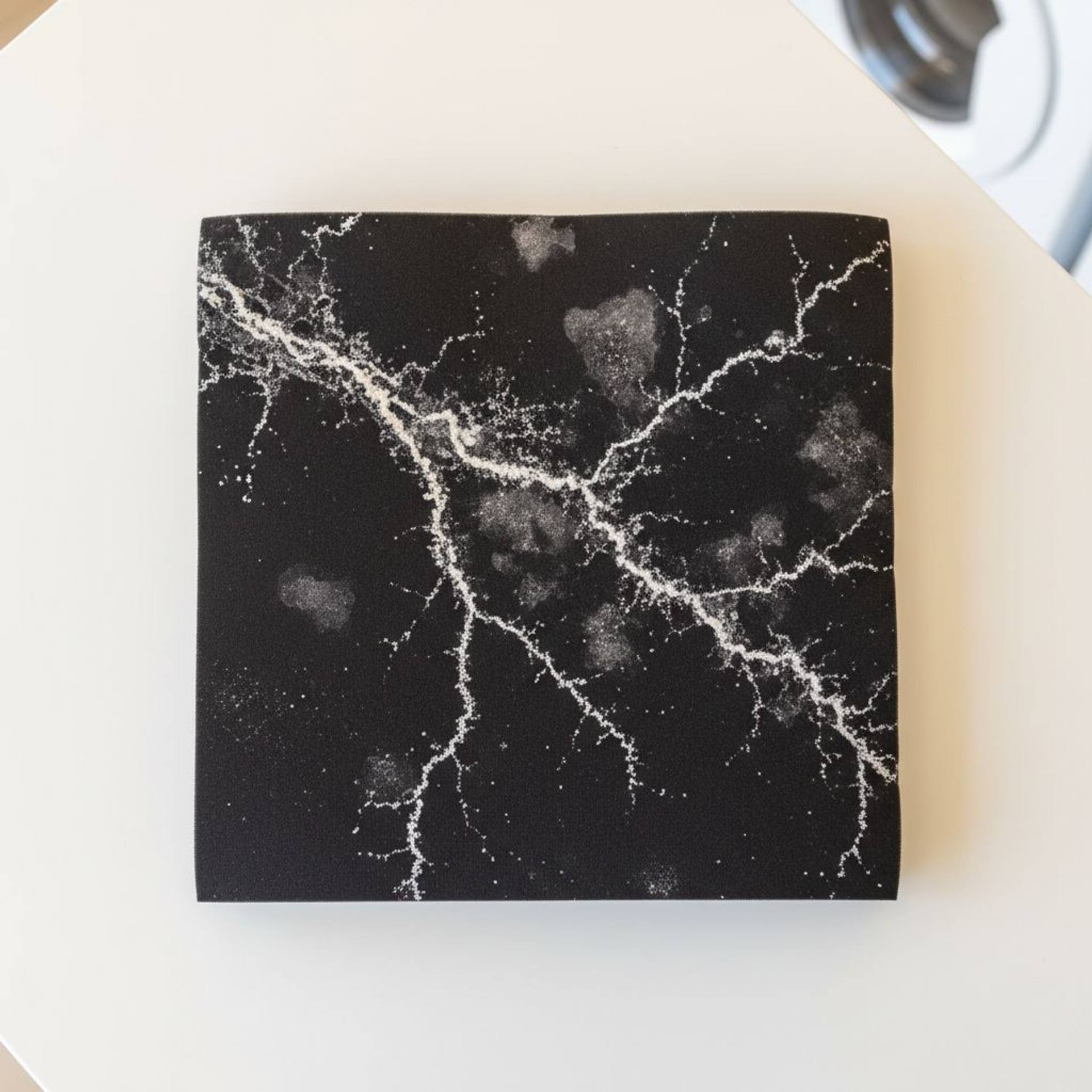
Neoprene requires a different approach to stains than regular fabric. You can't scrub the laminate surface with a brush, because this wears away the print and weakens the adhesive underneath. You also can't reach for hot water to tackle harder stains. The same limit of 20 to 30 degrees Celsius applies to stains as it does to regular washing. If the odor and stiffening affect regular swimwear rather than neoprene foam, you'll find the full post-pool routine in our guide Swimwear and Chlorine.
Most common neoprene soiling
Salt and sweat deposits (white streaks)
Soak in warm water with enzymatic foam shampoo, gently brush with a soft sponge, never a hard brush.
Pool chlorine (discoloration, stiffening)
Rinse immediately after pool exit with clean water, then do full enzymatic wash within 24 hours.
Delay in rinsing accelerates surface laminate oxidation and deepens stiffening.
Sunscreen and sunblock cream
Pre-treat the spot with diluted dish soap, then wash normally with enzymatic detergent.
Dye migration (discoloration from other clothes)
Permanent chemical discoloration is hard to fully reverse with home methods, so prevention is more important than cure.
Always wash dark neoprene separately, never with lighter fabrics.
Mustiness and mold from damp storage
Do a full enzymatic wash, then dry the material thoroughly in a breezy location.
Don't store damp foam again, even briefly, or the problem quickly returns.
Online guides suggest home methods for neoprene odor and stains based on vinegar and baking soda. Strong vinegar concentration can damage dye and weaken laminating adhesive, so it's better to skip it. It's safer and more effective to stick with dedicated enzymatic detergent at neutral pH.

Now you know the theory. Practice can be less forgiving.
If you would rather not risk your favourite piece, leave it to the specialists at Gorące Żelazko laundry in Lublin.


Most common questions about neoprene odor and stains
Key is enzymatic detergent, breaking down sweat proteins chemically, combined with complete foam drying after each wash. Perfumed liquid only masks odor temporarily.
Usually two mistakes together: rinsing only in cold water with no enzymatic detergent, and drying in a closed bag after training. Both promote bacterial growth instead of limiting it.
Soak the soiled spot in warm water with enzymatic foam shampoo and gently brush with soft sponge. Don't scrub with hard brush and don't use hot water. The 20 to 30 degree Celsius limit applies to stains too.
Rinse immediately after pool exit with clean water, then do a full enzymatic wash within 24 hours. Delay in rinsing allows chlorine to oxidize the surface and worsen stiffening.
Yes, dedicated enzymatic neoprene shampoos are available, some with natural antibacterial ingredients like grapefruit seed extract. Test a new product on a small material section before full application.