Membrane Leaking: Worn DWR or Delamination?
Step-by-step diagnosis: DWR, mechanical damage or delamination

Still leaking despite washing and reproofing? Before you decide the membrane itself is broken, it's worth breaking the problem down into three common scenarios and checking which one fits your situation.
Worn coating or delamination?
Diagnosing membrane jackets step by step and what a laundry can fix
It's worth breaking down "leaking" problems into three most common scenarios before you start hunting for causes. Each demands a completely different response, and confusing them can be costly. It leads either to unnecessary repair expenses for something that can't be done, or the opposite, giving up on a jacket that just needs reproofing.
Scenario 1: worn DWR
Sign: water quickly soaks into the fabric instead of beading up. Cause: worn or soiled DWR coating. Membrane damaged: no. Solution: reproofing with wash-in or spray-on and heat activation. This is the gentlest and by far the most common of the three scenarios.
Scenario 2: mechanical damage
Sign: water leaks from specific spots, for example at elbows or where a backpack strap rubs. Cause: fabric and membrane abraded or punctured. Membrane damaged: yes, but localized. Solution: dedicated patch repair like Gore-Tex Repair or Tenacious Tape with breathable layer. Never regular tape, it blocks breathability at the repair.
Scenario 3: delamination
Sign: membrane peels, visible flaking inside the jacket, fabric loses stiffness in bend areas. Cause: adhesive aging, repeated washing above recommended temperature, or polyurethane adhesive hydrolysis under moisture and time. Membrane damaged: yes, irreversibly. Solution: no repair, professional or DIY. This clothing qualifies for replacement.
Identify the problem: DWR vs delamination vs mechanical damage
What a professional laundry can fix, what it can't
What professional laundry can fix, what no laundry can
Do
- Reproofing with controlled activation temperature
- Degreasing before washing when creams or oils lower membrane surface tension
- Simultaneous washing and reproofing with repeatable parameters
- Professional patch on localized abrasion
Don't
- Membrane delamination: no method exists to reverse adhesive aging
- Hole damaging structure without patching
- Membrane degraded by UV and years of use
Drying and storing membranes
Simple rules that close the care cycle
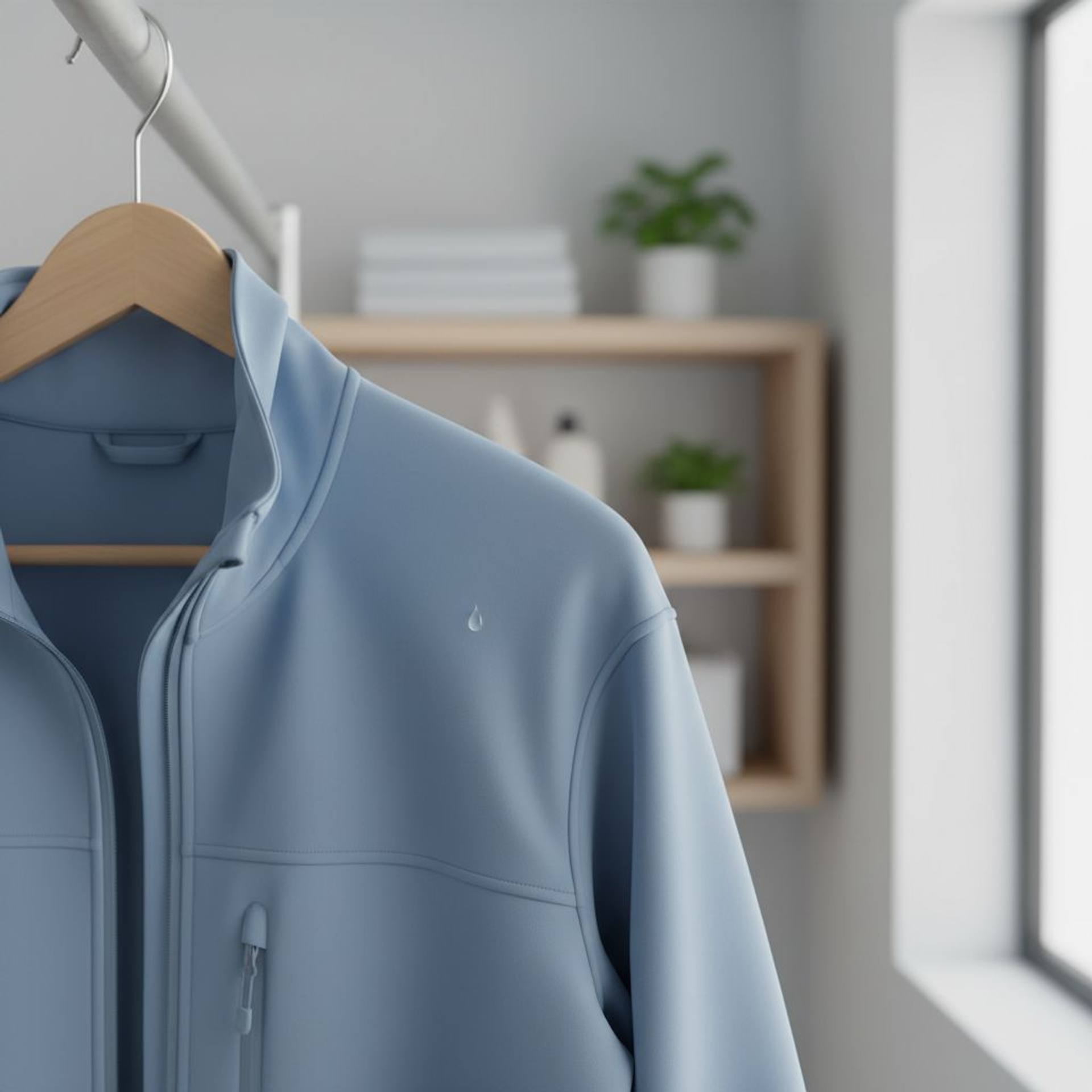
The drying and storage rules are straightforward, but often overlooked in practice, especially when you want the jacket to dry as quickly as possible. The checklist below closes the entire care cycle described in this article.
Three drying and storage rules
Dry according to tag
Hanger in shade or tumble dryer on low temperature if the tag allows it. Moderate heat further reactivates DWR coating. Never near a radiator or in full sun, as UV degrades both DWR and membrane structure.
No direct ironing
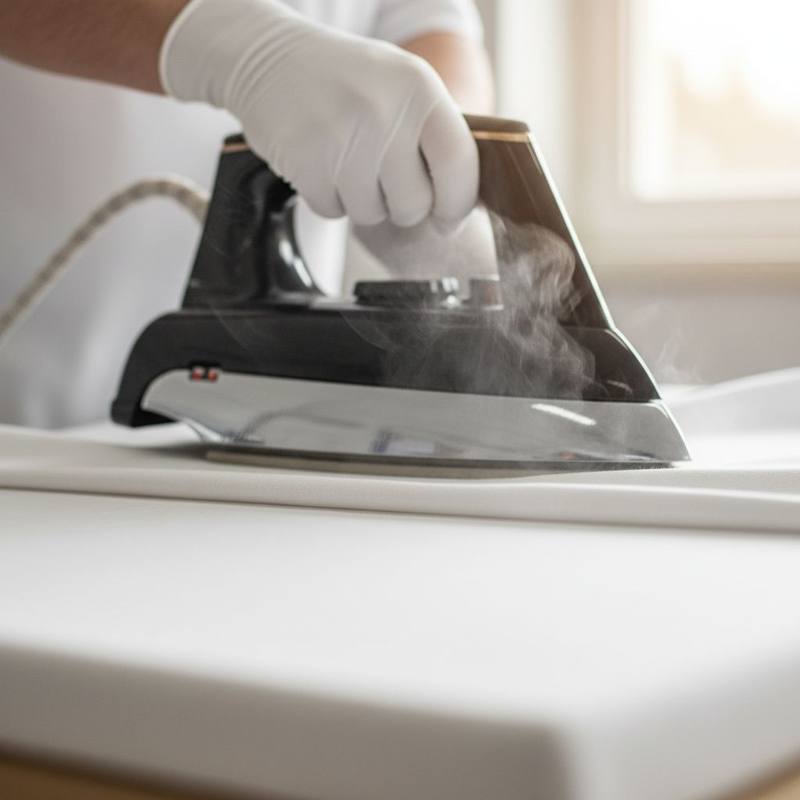
If ironing is necessary, only through a cotton protective cloth, low temperature on 'synthetic' setting, without steam directed straight at the material.
Seasonal storage
On a hanger in a well-ventilated place away from sun. Avoid prolonged compression in vacuum bags or tight backpacks. Sustained creasing accelerates micro-cracks in porous membrane structure.

Now you know the theory. Practice can be less forgiving.
If you would rather not risk your favourite piece, leave it to the specialists at Gorące Żelazko laundry in Lublin.


Frequently asked questions about diagnosing a leaking membrane
Depends on the tag, but many lines allow and even recommend low-temperature drying because moderate heat reactivates DWR coating. Never near a radiator or in direct sun.
Membrane peels, you see flaking or crumbs inside the jacket, and fabric loses stiffness in bend areas. This is irreversible, resulting from adhesive aging.
Localized puncture or abrasion can be fixed with a dedicated patch like Gore-Tex Repair or Tenacious Tape with breathable layer. Never regular tape, it blocks breathability.
Only through a cotton protective cloth, low temperature, 'synthetic' setting, without steam aimed directly at the material. Direct iron contact with the membrane risks melting.
Consider a laundry for high-value clothing, visible grease or cream stains, and uncertainty about material composition or when there's no clear tag. Suspected delamination needs expert diagnosis, not guessing. A laundry also excels at simultaneous washing and reproofing with controlled activation temperature, hard to repeat consistently at home.
About the author
Małgorzata Małecka
Owner of the Gorące Żelazko laundry
Małgorzata Małecka runs the Gorące Żelazko laundry in Lublin. Together with her team, she makes sure customers' clothes, shoes and fabrics come back clean and in the best possible condition.