Why lyocell pills and mats
fibrillation is a natural feature of microfibrils, not a defect of the fabric

What fibrillation is
You pull your favorite lyocell shirt from the washing machine and something is wrong: the surface has lost its sheen, looks matte, and in places you see small bobbles. Your first thought is usually “I ruined an expensive thing”.
Before you blame yourself, it is worth understanding the mechanism, because this is not an accident or a mistake in washing in the usual sense. The phenomenon has a name: fibrillation, and sooner or later it affects almost every piece of lyocell.
Fibrillation happens when microscopic fibrils on the fiber surface, swollen with water, separate under mechanical friction. Friction of fabric against fabric, or fabric against the drum of the washing machine, is enough to release these tiny fibers on the surface.
The effect is visible to the naked eye: a matte, “felted” look, small bobbles known as pilling, and sometimes noticeable color lightening exactly in the places of greatest friction, for example on the collar, cuffs, or the inside of pant legs.
This is a direct consequence of the fiber's production process: lower crosslinking of cellulose chains than in viscose means the microfibrils of lyocell separate more easily. It is a feature of the fiber itself, stronger or weaker depending on the quality of factory finishing, not a defect of a particular garment.
What intensifies fibrillation
High temperature
Washing above 40°C intensifies fiber swelling in water, making it easier for microfibrils to separate.
Long time and high spin speeds
A long wash cycle and high spin speeds increase the total mechanical friction time acting on the wet fabric.
Rough fabrics in the same load
Denim, terry towels, or hook-and-loop tape in the same load generate additional, localized friction against the lyocell surface.
Tumble dryer
High dryer temperature combined with intense rotational movement is one of the fastest ways to cause fibrillation.
Repeated washing without anti-pilling finish
Cheaper, generic lyocell without factory biofinishing pills noticeably faster with repeated washing.
Why fibrillation cannot be reversed
What you need to know
Professional enzymatic biofinishing, meaning cellulase treatment in a bath at pH 4.5 to 5.5 and 40 to 55°C for 30 to 60 minutes, is a factory process performed at the fabric finishing stage, before the garment is even sewn. It cannot be repeated at home or in a typical laundry service on a finished garment: the precise enzyme concentration is critical, and overdosing irreversibly weakens and thins the fabric, with risk of seam damage and a changed fit.
How to prevent fibrillation
Prevention, the only effective strategy
Do
- Turn the garment inside out before washing
- Use a mesh bag for delicate fabrics, it reduces friction against the drum
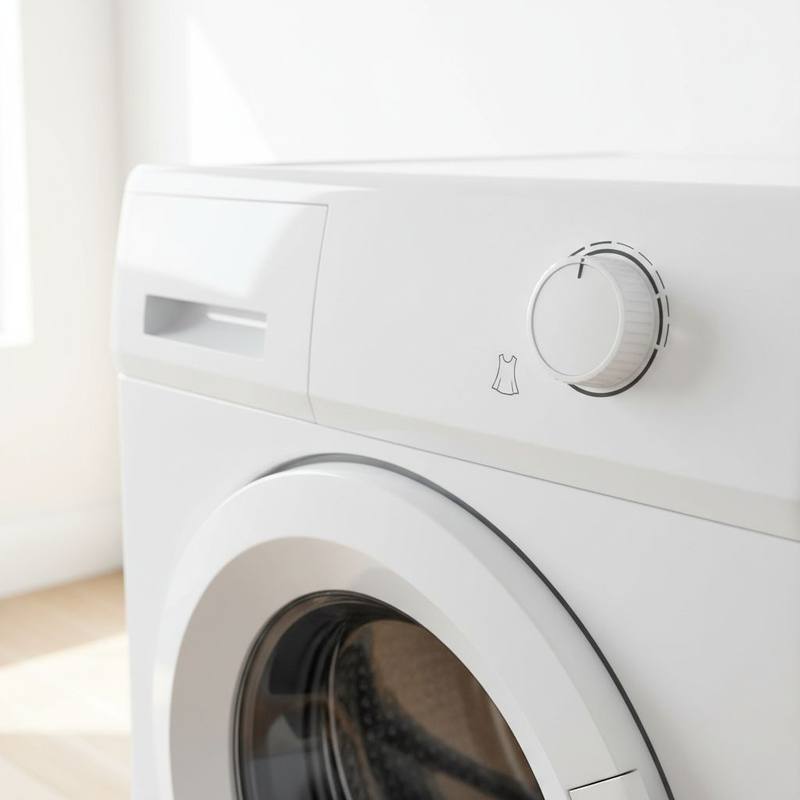
- Choose a 30°C program with a low spin speed
- Wash lyocell separately from rough fabrics
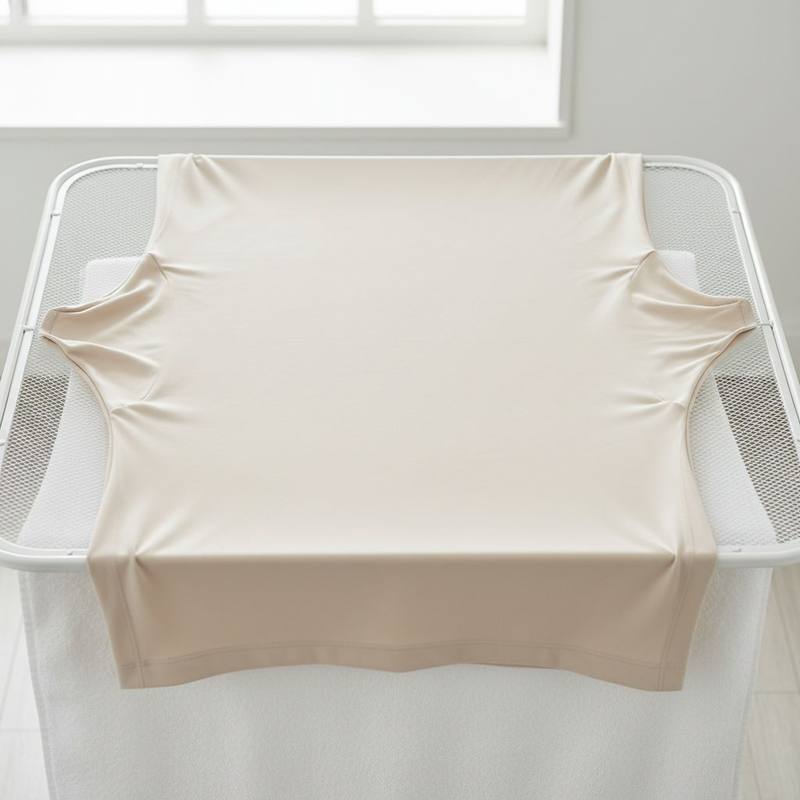
- Dry it flat or on a hanger, away from a radiator and direct sunlight
Don't
- Do not wash it with denim, terry towels, or items with hook-and-loop tape
- Do not choose a high spin speed or a long soak
As soon as the wash finishes, hang up or lay out the lyocell to dry. The longer a wet, swollen fabric sits crumpled in the drum or the laundry basket, the more time it has for extra friction, and so for fibrillation.
Washing and drying parameters that limit fibrillation
Washing
30°C, a gentle program or a wool and silk program. A lower temperature and gentle drum action mean less friction on the swollen fiber.
Spinning
Low spin speed. A high spin speed on wet, swollen fabric is the same mechanical fraying that causes fibrillation.
Drying
No tumble dryer. Dry it flat or on a hanger, away from a radiator and direct sunlight.
Ironing
Low temperature, ideally with steam, on slightly damp fabric. A too-hot iron further weakens an already compromised fiber surface.
Lyocell fibrillation versus polyester pilling
Two different phenomena, the same everyday name
Lyocell
fibrillation
On a finished garment the effect is irreversible.
Microscopic fibrils split off the surface of a single fiber, giving a matte, felted look. They cannot be shaved off without damaging the fabric.
Polyester and acrylic
pilling
The bobbles can be removed mechanically.
Bobbles form from the tangled ends of fibers on the fabric surface. A sweater shaver removes them without damaging the material.

Now you know the theory. Practice can be less forgiving.
If you would rather not risk your favourite piece, leave it to the specialists at Gorące Żelazko laundry in Lublin.


Frequently asked questions
Yes, this is fibrillation, resulting from fiber structure, not a defect of a particular garment. High temperature, friction against rough fabrics, and tumble dryers intensify it.
Fibrillation is not the same as synthetic pilling. In lyocell, microscopic fibrils split off the surface of the cellulose fiber itself under wet friction, giving a dull, felted look. In polyester or acrylic, the bobbles form from loose fiber ends that can be shaved off. Fibrillation on a finished garment cannot be reversed at home, so prevention is what matters.
Turn the garment inside out, put it in a mesh bag, and wash at 30°C on a low spin speed. Wash lyocell separately from rough fabrics, denim, terry towels, and items with hook-and-loop tape, because that wet friction is what causes fibrillation. Prevention is the only effective strategy, because fibrillation that has already formed cannot be reversed.
No. On a finished garment, fibrillation cannot be reversed either with home methods or at a typical laundry service. A sweater shaver, effective against synthetic pilling, will only cut and further weaken lyocell fibers. The only effective strategy is prevention with every wash.
Not always, but it speeds it up significantly. High dryer temperature and intense rotational movement combine heat and friction acting on a still-damp fiber. A dryer with a low temperature and a short cycle is safer, and natural drying, flat or on a hanger, is best of all.
About the author
Małgorzata Małecka
Owner of the Gorące Żelazko laundry
Małgorzata Małecka runs the Gorące Żelazko laundry in Lublin. Together with her team, she makes sure customers' clothes, shoes and fabrics come back clean and in the best possible condition.