Linen shrinkage in washing
why it happens, what determines how much it shrinks, and how to prevent it during washing and drying

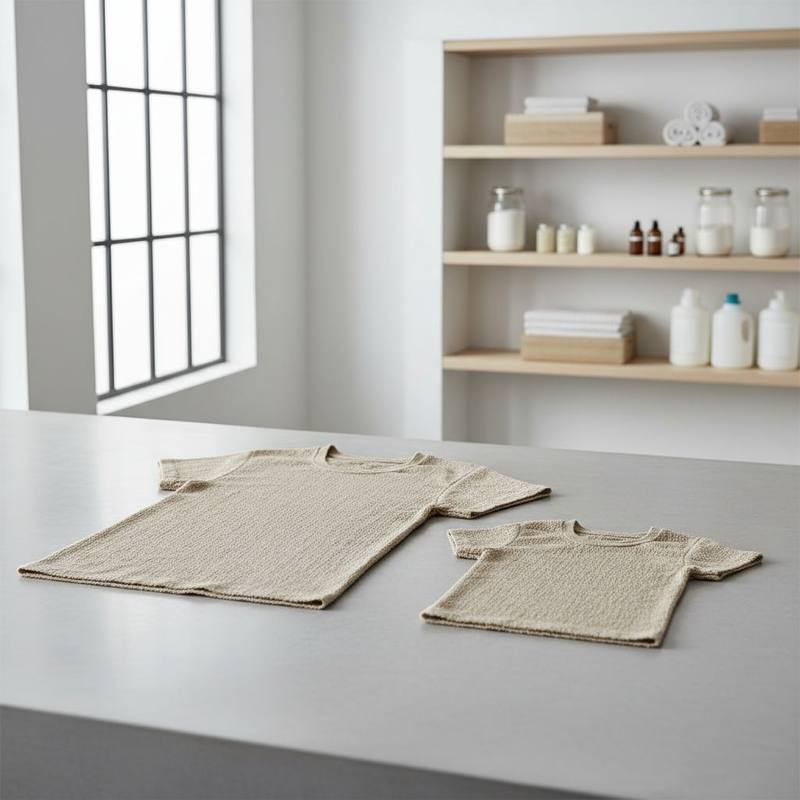
The total shrinkage potential of unprepared linen falls in the range of 4 to 10 percent. This is noticeably more than cotton, which typically shrinks 4 to 8 percent. The first wash is usually the most shrinking. Subsequent cycles at the same temperature produce much smaller amounts, as the fiber stabilizes after stress relaxation from manufacturing.
Three factors most often push shrinkage beyond normal: washing above 50 degrees Celsius, drying in a hot tumble dryer, and skipping a trial wash for linen that wasn't factory pre-washed (non pre-washed). Below you'll find exactly what happens to the fiber, how to prevent shrinkage on the first wash, and what to do if your linen has already shrunk.
Why linen shrinks
fiber structure, moisture, and stress left over from manufacturing
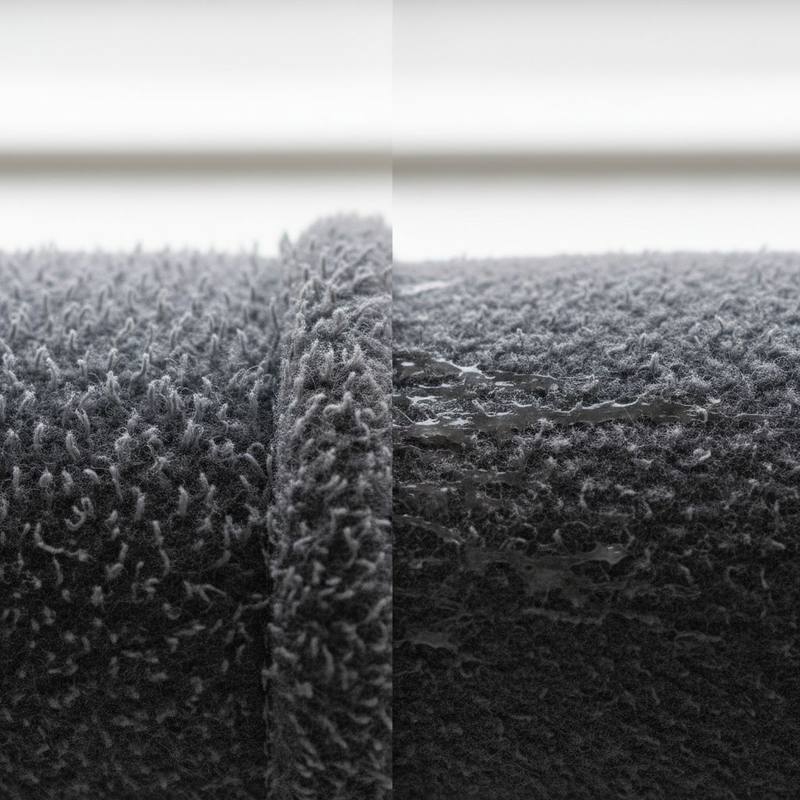
Linen is a cellulose fiber, and cellulose swells and changes its internal structure when exposed to water. During weaving and finishing, linen yarn is stretched on the loom, and the fibers set in that stretched state. The first contact with water, especially warm water, releases that stress and lets the fiber return closer to its natural, shorter length. That's why the first wash shrinks fabric the most, and later cycles much less: the manufacturing stress has already been released once and doesn't renew itself with ordinary washing.
Heat deepens this process, because it speeds up fiber swelling and the movement of water molecules within the cellulose structure. That's why washing and drying temperature affects linen shrinkage more than it does synthetic fabrics, which respond to heat quite differently.
Good to know
Fabrics labeled “sanforized” or “prewashed” have already been mechanically pre-shrunk at the factory before going on sale. This kind of linen loses only 1 to 3 percent of its dimension on the first home wash, so the risk of an unpleasant surprise is much lower than with linen that wasn't factory pre-washed.
Linen shrinkage based on washing and drying conditions
2-4 percent
3-6 percent
6-10 percent
additional 2-4 percent beyond shrinkage from washing
only 1-3 percent additional shrinkage
From this data comes one practical conclusion: it's not the washing temperature alone, but its combination with a hot tumble dryer that deepens shrinkage most. That's why the two rules below separate these two stages, rather than treating the whole care routine as one inseparable process.
How to prevent linen shrinkage
Do
- Wash new linen the first time separately at 30 degrees Celsius
- Dry in air instead of a dryer
- Rotate temperatures instead of always washing hot
Don't
- Don't dry linen in a high-heat dryer
- Don't wash new, factory-unwashed linen at 40 degrees Celsius right away mixed with other laundry
- Don't expect to fully reverse shrinkage: stretching damp fabric recovers 30 to 60 percent of lost dimension, and professional steam blocking is the best realistic result, still without guarantee of full recovery at shrinkage above 5 to 6 percent
How to safely wash new linen for the first time
four steps that keep shrinkage to a minimum
- 1
Check the label and the fabric's origin
If the label doesn't mention sanforizing or prewashing, treat the linen as never washed before and expect the upper end of the shrinkage range.
- 2
Wash it separately, at 30 degrees Celsius
Wash new linen for the first time on its own, on a cool gentle cycle, to avoid extra friction and uneven shrinkage.
- 3
Choose a low spin speed
A hard spin puts extra stress on wet fiber. Lower spin speeds shorten the air-drying time needed without increasing shrinkage.
- 4
Dry flat or on a line, away from a radiator
Air drying, without a tumble dryer, is the only way to keep first-wash shrinkage in the lower part of the 2 to 4 percent range.
What to do once your linen has already shrunk
partially restoring the dimension, step by step
- 1
Soak the fabric in lukewarm water
A short soak in lukewarm, not hot, water releases the cellulose fibers again and prepares them for gentle stretching.
- 2
Stretch the wet fabric back toward its original size
Wet linen is most receptive to shape correction. Gently stretch it by hand lengthwise and widthwise, comparing it to the pre-shrinkage size if you know it.
- 3
Dry flat in the stretched position
Lay the fabric flat in the target shape and leave it to dry without moving it. As it dries, the fiber partially retains the dimension it was given.
How much you can realistically recover
Stretching damp fabric recovers 30 to 60 percent of lost dimension, not a full reversal of shrinkage. Above 5 to 6 percent shrinkage, even several repeats of this procedure rarely restore the original size, and stretching too hard further weakens fiber that's already under stress.
Before you try it at home
Keep a scrap of the label or a fabric sample from before washing, if you can. Without a reference point it's hard to judge how much the item actually shrank, and when stretching damp fabric brings a real result versus just tiring the fiber for nothing.

Now you know the theory. Practice can be less forgiving.
If you would rather not risk your favourite piece, leave it to the specialists at Gorące Żelazko laundry in Lublin.


Frequently asked questions
Total shrinkage potential for unprepared linen is 4 to 10 percent. Cellulose shrinkage isn't fully reversible chemically: stretching damp fabric recovers 30 to 60 percent of lost dimension, with no guarantee of full recovery at shrinkage above 5 to 6 percent.
Wash new linen the first time separately at 30 degrees Celsius, dry in air instead of a dryer, and rotate temperatures instead of always washing hot. Temperature combined with a hot dryer deepens shrinkage most.
The first wash is usually the most shrinking. Subsequent cycles at the same temperature produce a much smaller amount, as the fiber stabilizes after stress relaxation from manufacturing.
Yes, but much less. Sanforized or prewashed linen loses only 1 to 3 percent of its dimension on the first home wash, because it was already mechanically pre-shrunk at the factory before sale.
Take it to a laundry when shrinkage exceeds 5 to 6 percent, the fabric is delicate, embroidered, or fitted, and stretching it damp at home isn't working. Professional steam blocking gives the best realistic result, though without a guarantee of full return to the original dimension.
About the author
Małgorzata Małecka
Owner of the Gorące Żelazko laundry
Małgorzata Małecka runs the Gorące Żelazko laundry in Lublin. Together with her team, she makes sure customers' clothes, shoes and fabrics come back clean and in the best possible condition.