How to remove stains and marks from lining
What can still be rescued at home versus what nothing can fix

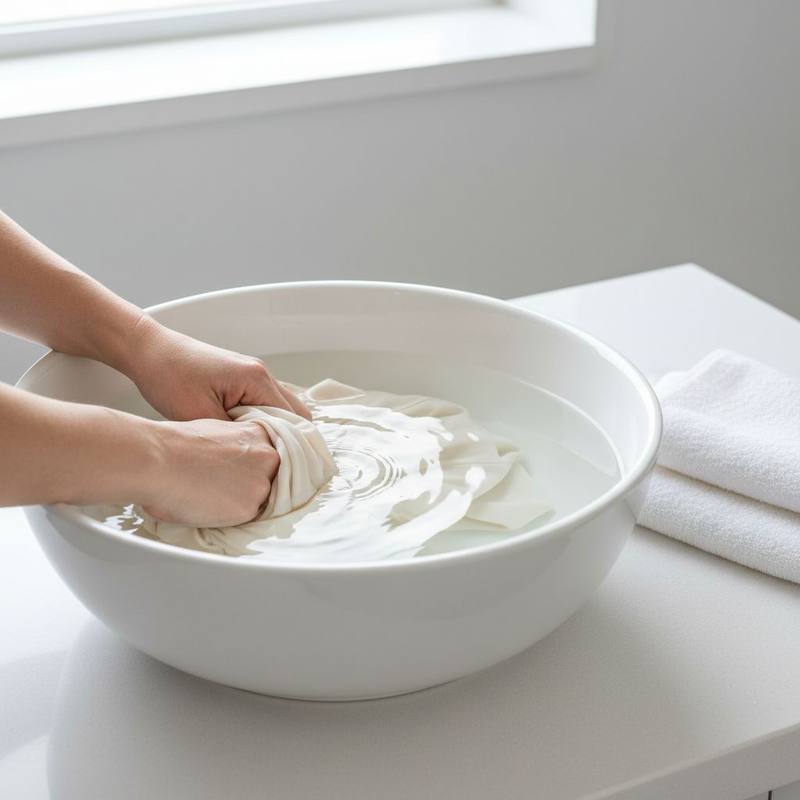
Fresh, surface-level soiling, for example grease or cosmetics, can be gently cleaned with cold distilled water. Add neutral shampoo with pH 5.5 to 7. Blotting from the stain's edge toward the center, without rubbing, gives the best results.
This method has a clear limitation though: it works only on fresh stains. Dried stains, absorbed deeper, almost always leave a mark after home spot cleaning. This is especially true for light cupro, where a visible ring or halo easily forms.
Most common problems on acetate and cupro lining
Grease, cosmetics (fresh)
Clean with cold water plus neutral shampoo, blotting from the stain edge toward the center.
Do not rub the stain or hold the material under running water.
Yellowing and sweat marks under arms
Requires professional assessment. Surface discoloration can sometimes be removed with a specialist reducing agent, but deep discoloration requires professional inspection without guarantee of complete removal.
Do not use home peroxide bleach on cupro marketed as 'Bemberg silk'; this is too aggressive for this fiber.
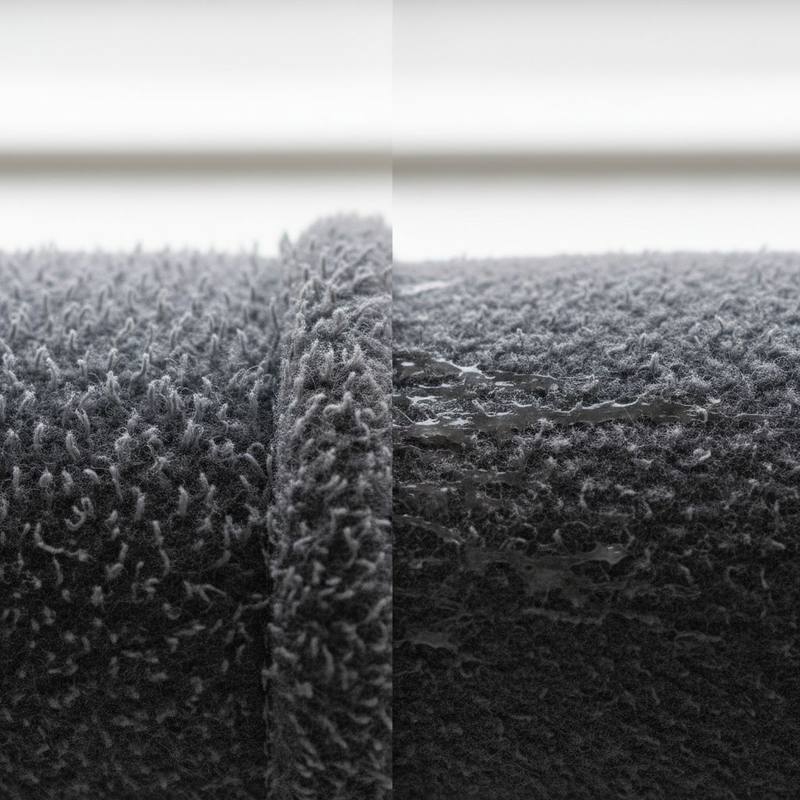
Water spotting on acetate
Requires professional steam pressing on a suction table.
This is a structural change, sizing migration, not a regular stain, so home spot ironing usually does not remove it.
Acetone or nail polish remover on acetate
No home or professional method exists to reverse fiber dissolution. The only option is tailor repair, such as replacing the damaged lining section.
The damage is irreversible. Only prevention helps, not storing polish remover or perfumes in contact with the garment.
Never use chlorine bleach on acetate lining, even trace amounts, for example from residue in the washing machine or contact with a towel. Chlorine oxidizes the cellulose chain, breaking glycosidic and C-C bonds in the polymer, causing permanent yellowing and loss of fiber strength. Cupro is moderately sensitive to chlorine, similar to cotton, so contact with it is also best avoided.
When to seek professional support for delicate lining care
Clear criteria: safe to do yourself or to the dry cleaner
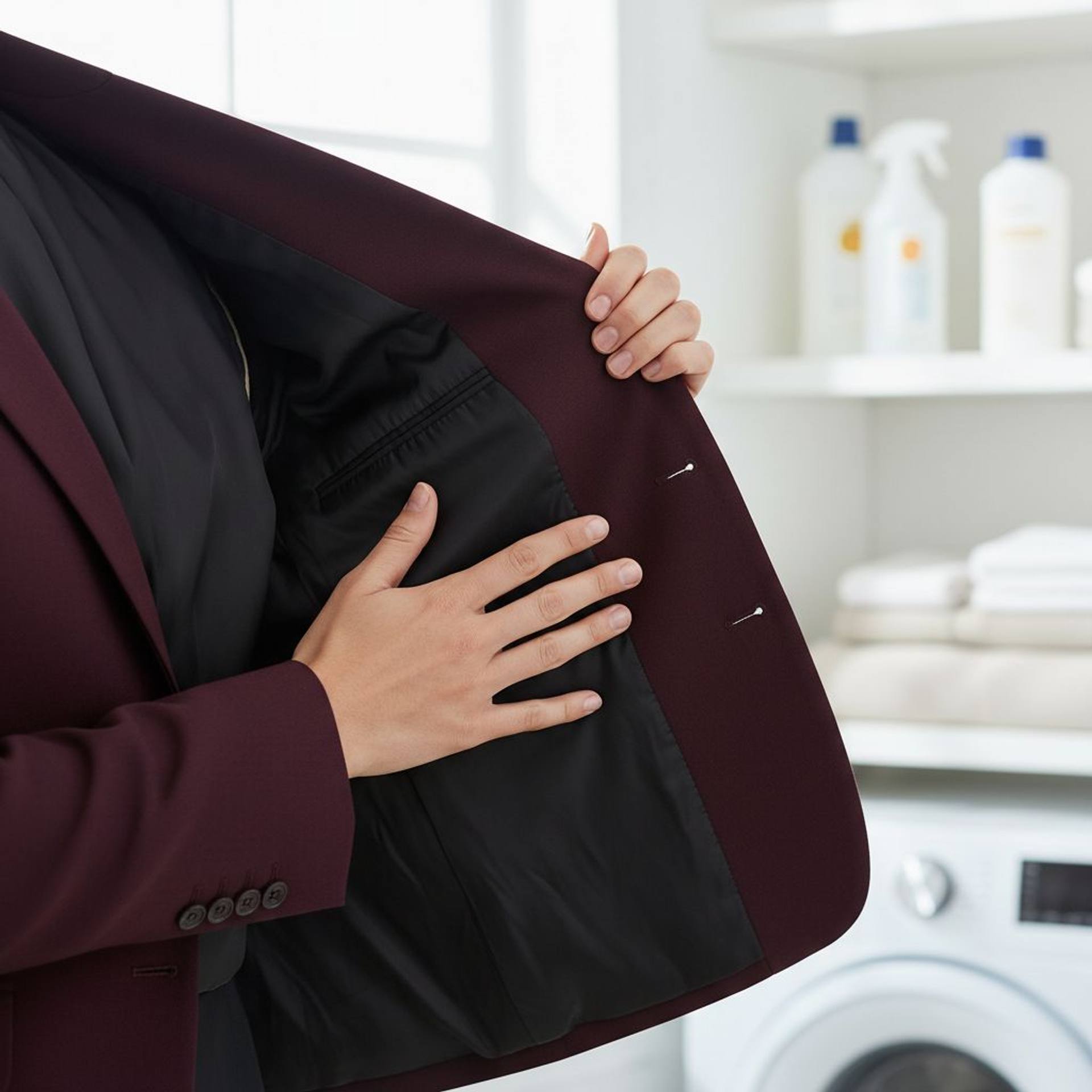
After reading this article you already know the difference between acetate and cupro, the safe temperature limits, and typical pitfalls. Time for a clear decision: do it yourself or take the garment to a professional.
Yourself or to the cleaner
Do
- Do it yourself when the symbol allows hand or gentle washing
- Do it yourself when the stain is fresh and only surface-level
- Do it yourself when ironing through a cloth at the correct number of dots on the label
Don't
- Take to the cleaner when there is no water symbol on the label or it is crossed out
- Take to the cleaner when acetone or another solvent has made contact
- Take to the cleaner when the lining is glazed, melted, has torn seams or sticks out from under the outer fabric
- Take to the cleaner when the stain is dried or on light-colored material where a visible ring easily forms

Now you know the theory. Practice can be less forgiving.
If you would rather not risk your favourite piece, leave it to the specialists at Gorące Żelazko laundry in Lublin.


Frequently asked questions
In feel and appearance yes, cupro is soft, has a silky sheen, and drapes well, which is why it is sometimes called 'Bemberg silk.' Chemically it is completely different: silk is a protein, cupro is pure cellulose, so they need different care methods.
Both materials are slippery, have a distinct shine, and drape well, so garments slip on easily and hang elegantly on the body. Acetate offers shine at low cost; cupro adds breathability and exceptional softness, which is why it appears mainly in premium linings.
Usually from contact with sweat and prolonged moisture in that spot. Surface discoloration can sometimes be removed with a specialist reducing agent at a dry cleaner, but deep yellowing requires professional assessment without guarantee of complete removal.
When the label has no water symbol or it is crossed out, acetone or solvent has made contact, the lining is glazed or has torn seams, or the stain is dried or on light material where a ring easily forms. In these cases the risk of home repair is too high compared to the chance of success.
About the author
Małgorzata Małecka
Owner of the Gorące Żelazko laundry
Małgorzata Małecka runs the Gorące Żelazko laundry in Lublin. Together with her team, she makes sure customers' clothes, shoes and fabrics come back clean and in the best possible condition.